“Public Spheres Between Power and Discourse: Habermas and the Problem of Marginalized Agency,” Essay, MariJean Wegert.
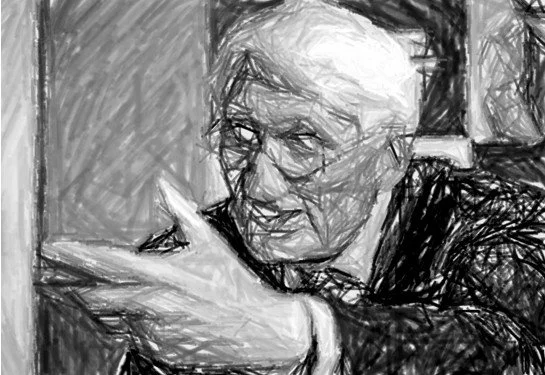
In 2026, German philosopher and sociologist Jürgen Habermas passed away at the age of 96. Best known for his work on the public sphere, communicative action, and democratic legitimacy, Habermas influenced generations of scholars and helped shape contemporary thinking about democracy. To mark his life and work, writers associated with North Meridian Press are contributing a series of short essays examining both the importance and limitations of his thought. In this essay, MariJean Wegert explores the relationship between Habermas’s public sphere and the marginalized people whose labor, knowledge, and experiences have historically existed beyond its boundaries.
Since Jürgen Habermas published his theory of the public sphere in the 1960s, theoreticians and historians have used his model in their examination of public discourse. Beyond starting with the assumption of the public sphere as defined by Habermas, what if the discourses inside the public sphere could be examined externally? Since the physical spaces of the first “public spheres” were created for the bourgeois and sourced by the labor of exploited Black bodies, what if those bodies were centered instead? By consulting the voices who have been historically and economically outside the spheres of discourse, (beyond counterpublics even) we have the opportunity to examine the space around the constructs and re-map its contours. In this case, centering marginalized voices in an intersectional way in expansive relationship to Habermas’s defined sphere can find new ways to imagine what is possible. Rather than asking only how marginalized groups form counterpublics in response to dominant publics, this essay asks what becomes visible when we examine the labor, bodies, and material conditions that make those dominant publics possible.
Habermas traces the emergence of the bourgeois public sphere through institutions such as English coffeehouses and French salons in the seventeenth and eighteenth centuries, where bourgeois society gathered for discussion and debate.¹ In this model, these circles of discourse (or the “public sphere”) were primarily “centers of criticism— literary at first, then also political— in which began to emerge, between aristocratic society and bourgeois intellectuals, a certain parity of the educated.² Habermas theorized that these spaces for discussion, rational argument, and exchange of sophisticated ideas were necessary for the development of a healthy society in a post-feudal system, where the discourse had been constrained to the elite who hold power.
By looking into the physical structures of the spaces that constituted the public sphere, we can discover their edges: namely, the coffee house. British coffeehouses depended upon commodities produced through Atlantic systems of colonial extraction, including coffee cultivated by enslaved laborers in Saint-Domingue. The Haitian Revolution unfolded in the context of the French Revolution, whose language of liberty and equality circulated throughout Saint-Domingue, even as enslaved people transformed those ideals in ways that challenged French colonial rule and slavery itself. Since the physical spaces of the first “public spheres” were created for the bourgeois and sourced by the labor of exploited Black bodies, what if those bodies and stories were centered?
In May of 2020, a police officer in Minneapolis, Minnesota, knelt with his knee on the neck of George Floyd for nine minutes and twenty-nine seconds, resulting in his death. In the examination of the events surrounding George Floyd’s death, Chauvin’s prosecuting attorney, Steve Schleicher, pointed out that during the moments when Chauvin knelt on Floyd’s neck, he took in the energy of the surrounding public. According to Schleicher’s narrative, a passerby called out to Floyd: “[The passerby called out], ‘You can’t win. You can’t win.’ And George Floyd replied, ‘I’m not trying to win…I’m scared.’ But the defendant [Chauvin] was trying to win. He wasn’t going to be told what to do. He wasn’t going to take a challenge to his authority. He was trying to win and George Floyd paid for it with his life.”³
This insistence of power in the hands of the hegemony unfolded a scene – so familiar in the United States – in which passers-by were socially and politically obligated to watch a man be murdered. His words – rational, earnest, and accurate – were ignored by the police officer, who, puffed up on his power, was willing to let a man die rather than lose face. And, he almost got away with it.
Philosopher and Africologist Molefi Kete Asante offers an alternative framework rooted in African and African diasporic intellectual traditions rather than beginning with Eurocentric assumptions about discourse. He is particularly concerned with forms of discourse that do not assume a white-centric mode. Asante explains how in religion and politics, the speaker, in the Eurocentric colonial mode, the goal seems to be to win and do so by being perceived as reasonable according to the Western, colonial definition of reason.⁴ Asante connects the use of language, particularly written, persuasive forms of discourse, to this assumption, recognizing that “By defining not only the terms of discussion but also the grounds upon which the discussion will be waged, the established order concentrates power in its own hands.”⁵
Expanding Habermas’s social and political sphere of discourse lies in giving power back to marginalized voices in such a way where they can be expressed not only through the mediums created by whiteness, but on their own terms, with their own modes of knowledge, their own creativity. This shift is both urgent and necessary to envision a world that creates space for life for all people to live in their fullness of agency and to imagine a thriving world.
MariJean Wegert is an American poet, essayist, and professional ghostwriter based in Northern Indiana. Her creative writing explores the "poetics of place," blending ecology, myth, and deep connection to Midwestern cultural landscapes. Her debut collection of poetry, Water the Bones: A Liturgy for the Midwest, was published by North Meridian Press in 2024.
Footnotes:
1.) Jürgen Habermas, The Structural Transformation of the Public Sphere: An Inquiry into a Category of Bourgeois Society, trans. Thomas Burger (MIT Press, 1991), 32.
2.) Habermas, Structural Transformation, 32.
3.) Steve Schleicher, “Prosecution Closing Argument: Derek Chauvin Trial for Murder of George Floyd,” Rev, April 19, 2021, 22:44, transcript
4.) Molefi Kete Asante, The Afrocentric Idea: Revised and Expanded Edition (Temple University Press, 1998), 32.
5.) Asante, Afrocentric Idea, 34.
Works Cited
Asante, Molefi Kete. The Afrocentric Idea: Revised and Expanded Edition. Temple University Press, 1998.
Habermas, Jürgen. The Structural Transformation of the Public Sphere: An Inquiry into a Category of Bourgeois Society. Translated by Thomas Burger. MIT Press, 1991.
“Prosecution Closing Argument: Derek Chauvin Trial for Murder of George Floyd.” Rev. April 19, 2021. Rev transcript
Warner, Michael. “Publics and Counterpublics.” Public Culture 14, no. 1 (2002): 49–90. https://doi.org/10.1215/08992363-14-1-49.