
“maybe hope lies there,” Interview, Benjamin Gucciardi and RS Deeren.
In his second collection of poetry, Arguments: Poems, Benjamin Gucciardi brings his readers into a beautiful tug of war between action and inaction, impact and intent, and hope and grief. The book is partly a response to this moment in history, a time of piling environmental disasters and compiling social and political strife. It is also a meditation on an individual’s place at the infinite crossroads of these turmoils. With a command for scope, Gucciardi allows his readers to see the micro—a mother forced to pretend for her family, a note scribbled at the bottom of a diagram detailing a mining operation— while simultaneously connecting them to the macro—the fate of the world and humanity’s place in it is the culmination of our treatment of each other and the planet. In the interview below, Gucciardi explains how poetry is a great entryway into the complexities and contradictions that make up not only a single person’s life, but of the lives of all of us. He talks about the need for hope and the scale at which we can care for each other, even as more storms begin to stir.
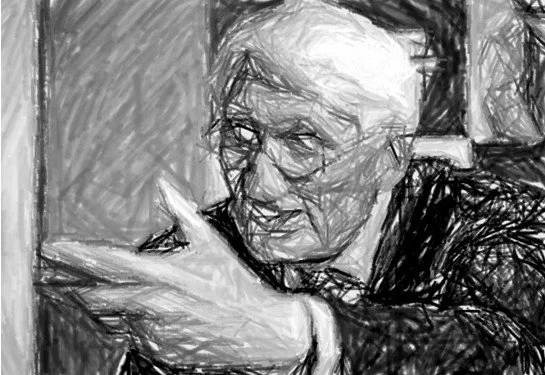
“Public Spheres Between Power and Discourse: Habermas and the Problem of Marginalized Agency,” Essay, MariJean Wegert.
In 2026, German philosopher and sociologist Jürgen Habermas passed away at the age of 96. Best known for his work on the public sphere, communicative action, and democratic legitimacy, Habermas influenced generations of scholars and helped shape contemporary thinking about democracy. To mark his life and work, writers associated with North Meridian Press are contributing a series of short essays examining both the importance and limitations of his thought. In this essay, MariJean Wegert explores the relationship between Habermas’s public sphere and the marginalized people whose labor, knowledge, and experiences have historically existed beyond its boundaries.
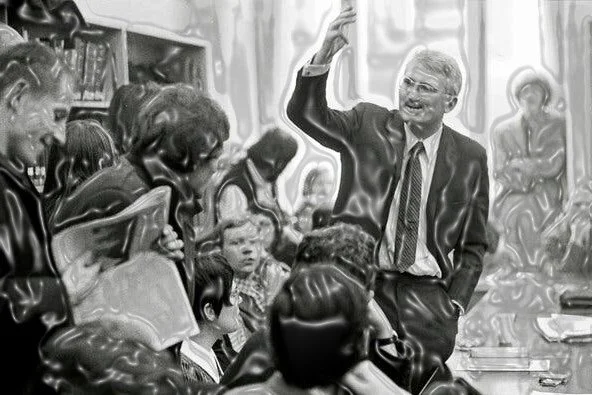
“Executive Orders Between Facts and Norms: Habermas and the Problem of Democratic Legitimacy,” Essay, Tina Deshotels.
In 2026, German philosopher and sociologist Jürgen Habermas passed away at the age of 96. Best known for his work on the public sphere, communicative action, and democratic legitimacy, Habermas influenced generations of scholars and helped shape contemporary thinking about democracy. To mark his life and work, writers associated with North Meridian Press are contributing a series of short essays examining both the importance and limitations of his thought. In this essay, Professor Tina Deshotels explores Habermas’s theory of democratic legitimacy through the language of presidential executive orders, asking how legal authority can remain intact even as the democratic foundations that legitimize it become increasingly fragile.



“Presidential Fitness and the Creation of the Twenty-Fifth Amendment,” Interview, John Feerick and Wesley R. Bishop.
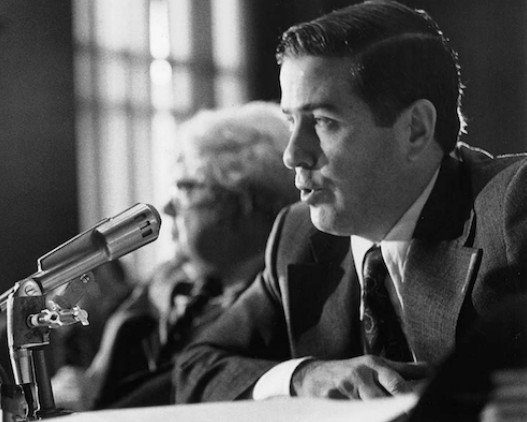
In the summer of 2026, North Meridian Review managing editor Wesley R. Bishop corresponded by email with John D. Feerick, professor emeritus and former dean of Fordham Law School, about the history and meaning of the Twenty-Fifth Amendment. Feerick was an important legal scholar and participant in the amendment's development. His 1963 Fordham Law Review article, “Presidential Succession and Inability,” helped bring renewed attention to the constitutional problem of presidential inability, and he subsequently worked with Senator Birch Bayh and others during the amendment's development. The Twenty-Fifth Amendment, ratified in 1967, addresses presidential succession, vacancies in the vice presidency, and the temporary transfer of presidential powers and duties when a president is unable to discharge them. In this interview, Feerick discusses the amendment's origins, the concerns that shaped its drafting, and the ways its provisions have been understood and misunderstood over the decades.