“Stories of Place on Cherokee Literature and Appalachia,” Interview, Annette Saunooke Clapsaddle and Wesley R. Bishop.
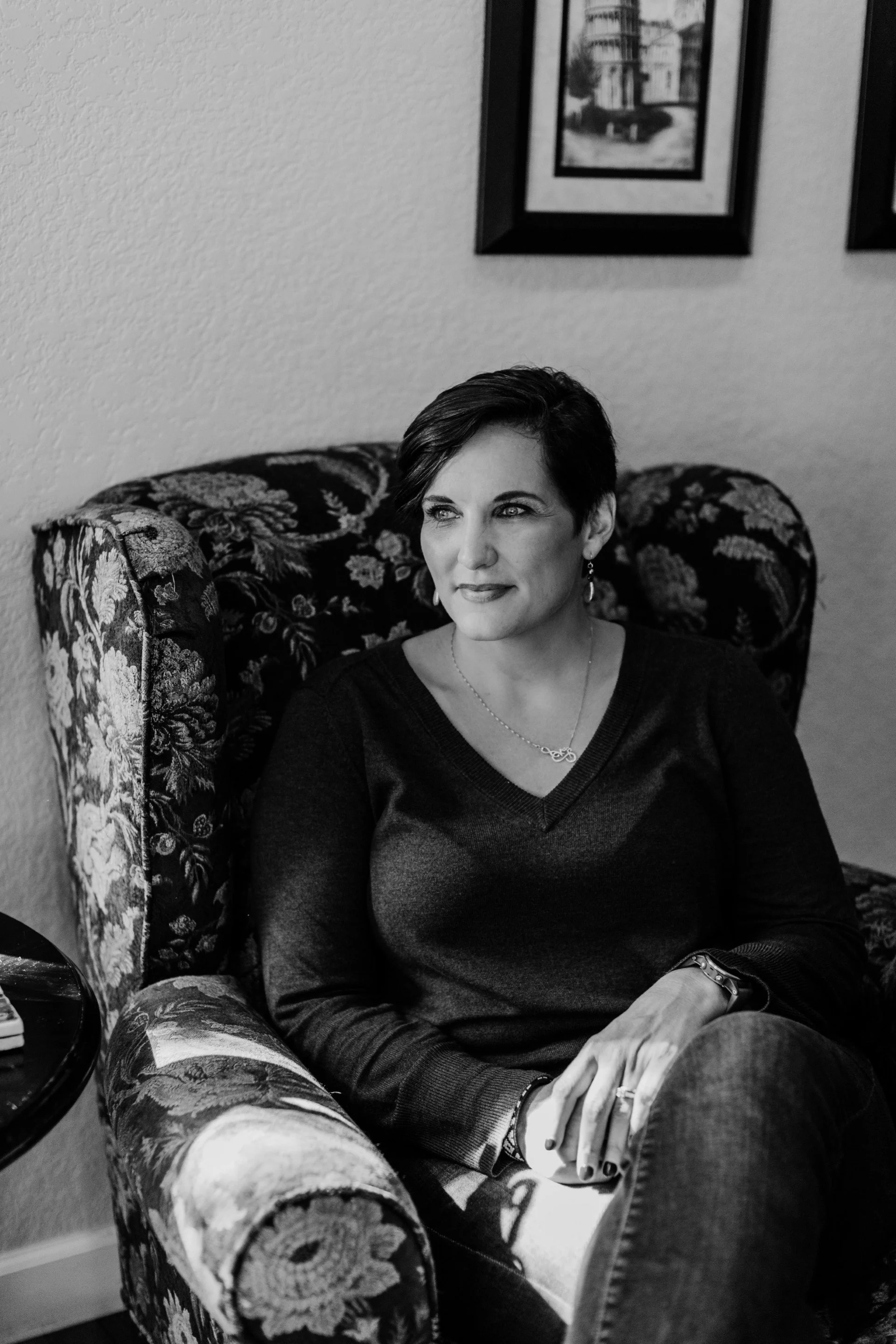
In March 2026 managing editor Wesley R. Bishop sat down with novelist Annette Saunooke Clapsaddle to talk about her work, regionalism, and Cherokee and Appalachian literature. The conversation was an outgrowth of a panel they were on at the 2026 annual Appalachian Studies Association conference held in Huntington, West Virginia. The interview has been edited for clarity and length.
Wesley R. Bishop: To start, tell us a little about yourself and how you became a writer. When did you realize you were a writer?
Annette Saunooke Clapsaddle: I was born and raised in Cherokee, North Carolina, just off the Qualla Boundary, which some people refer to as the reservation. It's not a reservation. Long story there. It's located in Western North Carolina, really at the entrance to the Great Smoky Mountains National Park. I'm an enrolled citizen of the Eastern Band of Cherokee. I lived in this area through high school, then left for New Haven, Connecticut, for undergraduate at Yale, and then went straight on to graduate school in Williamsburg, Virginia, at the College of William and Mary. After that, I returned home. So for most of my life, I've lived in Cherokee, North Carolina.
I do not remember a time in my life when I didn't write for fun. I have these little books that we made in elementary school. I was probably in second grade. They're just cardboard books, lined pages in the center, with stories that we would write. I always had great teachers who encouraged creative writing. So I don't think there was ever a decision where I said, "I'm going to be a writer." It was just kind of what I did. It was part of who I was.
I'm realistic enough to know that I also didn't think it was a career because it's barely a career, but I got more and more serious about it as I got older, in college, taking some classes. My undergraduate and master's degrees are in American studies, with a focus in Native American studies.
I don't have an MFA, so my writing instruction is really just some classes I took while I was in school and some writing workshops that I've done. I started writing my debut novel while I was teaching high school at Swain County High School. I was also coaching basketball, and my two boys were young at that time, so that was a pretty chaotic period in my life.
Prior to that, I was the executive director at the Cherokee Preservation Foundation. Just after graduate school, I worked for our principal chief in his office for a few years on special projects and speech writing and whatnot for him. But my entire career has been back home, and it's been a mix of writing in whatever role I was in. It's just something that I've done my whole life.
WRB: As you began taking writing more seriously, what genre did you start with, and how did you arrive at it? Did you begin with poetry, novels, short stories, or something else?
ASC: Yeah, that's a good question. I haven't really thought about those early days that much. Certainly in elementary school, I think we were writing short stories. But I also know that poetry really encouraged those middle school and high school years, when you're having all the hormonal feelings that make for really great poetry.
I think the first contest I won, or I may have even been runner-up, was a poetry contest in North Carolina, like the North Carolina Poetry Society. I won $25 and I was in eighth grade. Then the year that my novel came out, for Christmas my dad gave me a copy of that canceled check framed as the first money I ever made as a writer.
I can't believe he held onto that canceled check, but I'm looking at it over here because I've still got it. So I guess I thought I was a poet for a hot minute, but I've always been really interested in the long form. I know when we were presenting together, I talked about how difficult short story is for me. It's something that I'm really challenged by because I just feel like there's so much I want to include in storytelling and the narrative that I want to tell.
Poetry is something that I've done. I've published a couple of poems, but I don't feel as confident in that area. It is a way that sometimes my writing initially comes out. For me personally, it's just to get it down, kind of that raw emotion, or more like fixating on an image or a scene in that kind of short form.
But as I progress as a writer, I consider myself a novelist. I also write quite a bit of creative nonfiction. That's kind of a shorter form as well, but that's a good balance for me, to write creative nonfiction and then longer-form fiction.
WRB: What is your writing schedule like, and how has it changed over time?
ASC: I love answering this question because I am going to be honest.
WRB: Please do.
ASC:I know some people expect this very rigid schedule. When I was teaching high school and I had two kids and I was coaching basketball, my schedule was fairly rigid.
I got up at five in the morning, and with that novel, I had done a workshop that helped me outline it broadly. So when I got up at five in the morning, I was going from point A to point B. I knew where I was going and I could just fall into that rhythm and get it done. When I had longer breaks from teaching, like the summer, I would work on it for longer periods of time.
Now that I have complete control of my schedule, it is absolutely chaotic. It doesn't make any sense. It's very problematic. It is not one that should be replicated.
I will say this: these are the things I do believe have helped me when I'm doing it right. First of all, I really do like writing in the morning, whatever I'm working on, because I believe in that kind of transition period from sleep and dream into reality. I think that's such a strong time to work, to be creative. So I wake up at five, and if I can get to my computer and be creative during that time, that's the best.
When I'm working on a novel, it's really important that I take Robert Gipe's advice that we make fun of him for. He told us in a workshop one time, "Touch it every day." I'm like, "Robert, that doesn't sound nice, but okay." But it's true for a novel, especially for me. I'm holding so much at one time that if I'm not just kind of in it at least for a little bit every day, then I lose where I am. I have to reread a bunch. So I think just spending some time with it every day, even if it's just intentionally thinking about it, is important.
The other thing that I think is very helpful is that when I stop working on a piece for the day, I've started my next day's work on it, whether it be an unfinished sentence or an unfinished scene. I know exactly where I'm going to pick up the next day, so I'm not sitting at my desk wondering what I'm going to do for the day.
I would say those are things I try to do, and when I do them, I'm doing well, but life gets in the way quite often. So yeah, I'm not a great example. Do as I say, not as I do.
WRB: I agree with you. I recently got tenure, and it's the first time since I graduate with my bachelors that I've had some control over my schedule. In grad school and my first few years as a professor, I remember asking people, "When do you write?" And they're like, "Well, you don't have time. Just write when you can." Some mornings you have to be there at eight, other days not until one. So it's hard to have a rigid schedule. But that is a nice reminder: just write every day, work on it every day.
ASC: I always have to laugh when, and this is going to be a broad statement, so I hate to stereotype, but when older gentlemen who have wives who take care of everything are writers and say they have a very strict writing schedule, I have to kind of laugh and say, "Yeah, I know why you can have a strict writing schedule. You're not making dinner, you're not doing the laundry, you're not having another job. You're retired from everything else."
So there is some privilege to having a schedule like that. I just think it's important that people who want to write understand that you have to find the time when you can and not feel bad that your schedule doesn't look like some famous writer's schedule.
WRB: That's very well said. I have a friend who's a single mom with two kids, and she jokes about how you read about these old writers and historians who could write all day because somebody brought them food on a plate. Other people don't have that privilege. Can you tell us about the process of publishing your debut novel? Was it the first novel you wrote, or the first one that caught an agent or publisher's attention? Why do you think it found an audience?
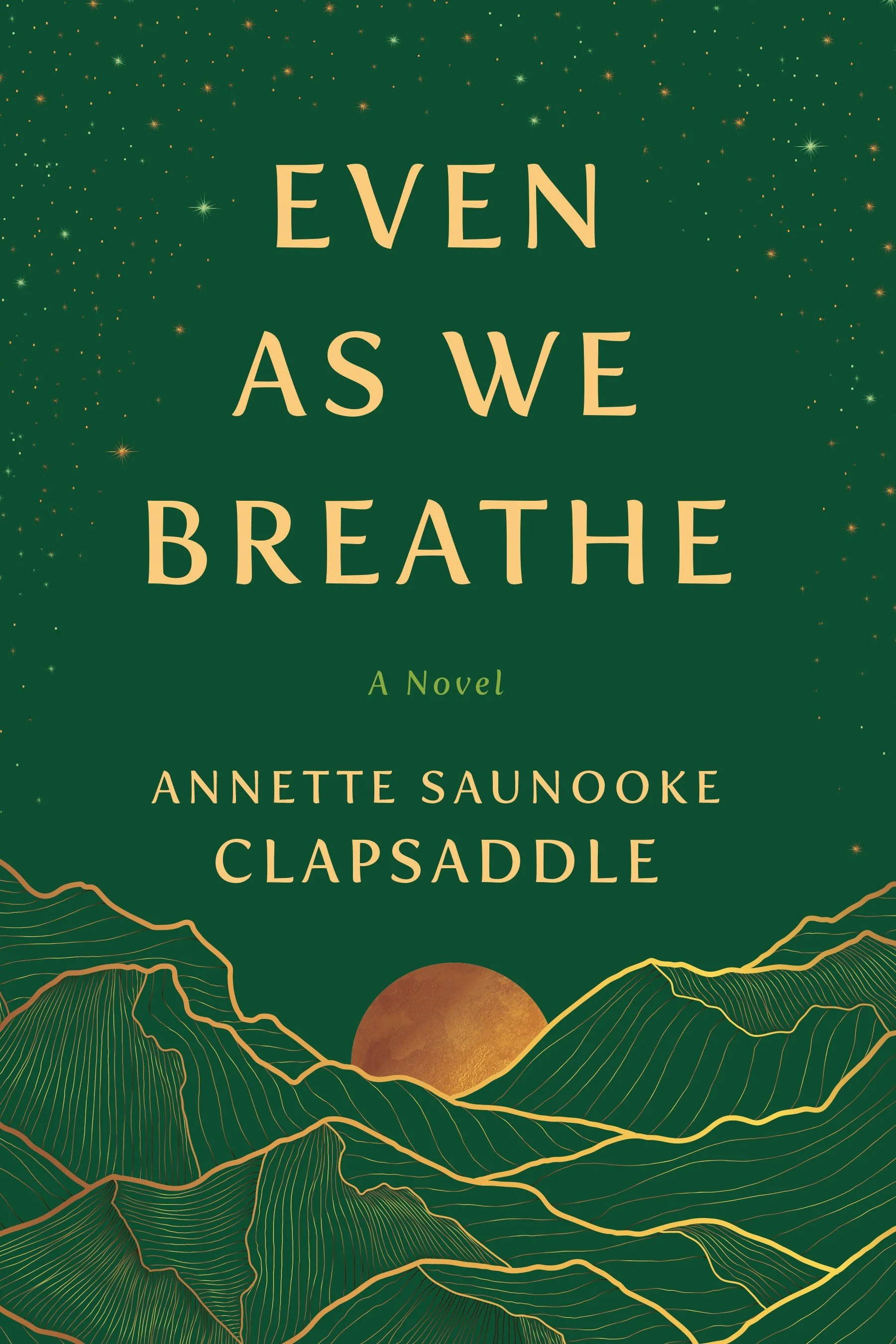
ASC: Sure. It is the second manuscript I wrote. The first manuscript I really started writing in college, like everybody's writing the Great American novel in college, and of course I played around with that afterward. That one was a finalist for the PEN/Bellwether, which was really exciting. I thought, "Oh, this is it. I'll find an agent and we'll get this published." And it just didn't happen that way. I wasn't able to find an agent with it, and there was some opportunity almost for it to get published, but everything just fell through.
In hindsight, it needed work. I mean, like most first novels do. I still think it's a good book. I've actually gone back to it. That's what I'm doing right now, reframing some things and cleaning up some things. But I shelved that novel and, in my depression, signed up for a workshop called Get Her Done: Write Your Novel, offered through the Great Smokies Writing Program in Asheville through UNCA.
Heather Newton was the instructor. She's also a great writer. That process really set up for me what I was talking about earlier, which is that I ended up, after that workshop, having a structure to the novel, even as we brainstormed what would come next. During that workshop, we had to write a first chapter, a climactic chapter, a final chapter, and a synopsis, which is insane, right? The hardest thing on earth, I think, is writing a synopsis of a novel.
WRB: Oh, I totally agree with that.
ASC: So I've taken that workshop and started on Even as We Breathe, and some things kind of influenced that story and why I wanted to tell it. Then I go to Hindman Appalachian Writers Workshop every summer, pretty much every summer. I've been workshopping that novel, and one summer, none of the participants knew this, but Hindman Settlement School had partnered with the University Press of Kentucky to start an imprint called Fireside Industries that would be publishing fiction and poetry. The editor was going to be Rebecca Gayle Howell, who's an incredible poet.
She was on campus, and we didn't know it, but she was kind of scouting out work for the imprint. I came to the workshop with this new manuscript. I had been querying agents. I had been talking to one agent back and forth who just kept asking for different revisions without a contract.
WRB: [shakes head in agreement]
Annette: So Rebecca asked me to sit down with her in the dining hall one day and said to me, "I've heard about what you're writing. I'd really like to see your manuscript." I thought she was just being super nice because I don't know if you know Rebecca, but she's kind of like this goddess figure. She's like, "I feel like I should just bow down to her when I talk because she's just ethereal almost." I thought she was just being her wonderful self and encouraging me.
I said, "Yeah, okay." And she said, "No, no, can you email it to me today?" So then I kind of looked at her weird, probably, and said yes. Then she explained to me that the imprint was starting.
Of course, it took her some time to review it and whatnot, but she called with the offer to publish it. I still was in limbo with that other agent, which would have been a New York agent for the bigger publishers.
I finally decided that I would rather it get out in the world for sure and in the hands of people I trusted. I trusted Rebecca. Eventually Silas House would be my editor, which was also insane when he asked me, "Is it okay if I'm your editor?" I was like, "Okay."
WRB: [laughs] Right. Silas House has to ask permission? You're just like, "Of course, yes, you may."
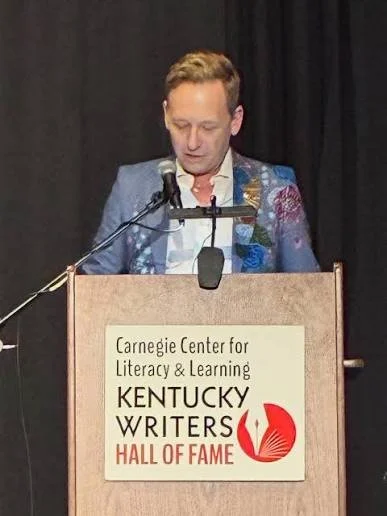
ASC: [laughing] Silas was just inducted into the Kentucky Writer’s Hall of Fame! Right? Of course I am going to say yes.
Anyway, it was just a really supportive place for my first work to be, and I didn't have to go through an agent. Coincidentally, after the book came out, I did an interview with NPR and got an email from a big New York agent who said, "I heard your interview and I was wondering if you have representation." I of course didn't. So we set up a phone call, and at the end of our call she offered representation for my next book.
What's funny about that is she is an agent that I had queried in the past for that novel and gotten a form rejection from. To this day, she still doesn't know that because I haven't told her. I was waiting on her to sell my next book before I tell her. But that just goes to show that probably her assistant read the manuscript.
As a writer, you just get used to rejection. It's not always rejection. It can be rejection one day and acceptance the next day, even from the same person. And so there's a lot of luck involved in that. So now I have an agent. I won't get into the difficulties of that, which have their own challenges, but that's where I am right now.
WRB: Yeah, I think that happens more often than not. You can have a really good book, but an agent can only realistically take on so much work. It's a problem in the publishing industry.
Can you tell readers a little about the background of your second novel? What drew you to that time period and that character? I was surprised when we met at Appalachian Studies and I started reading your book because I wasn't expecting historical fiction, given how tied your work is to contemporary and social issues.
ASC: Yeah, no, that's a great question. This is going to sound stupid, but I did not realize that I was writing historical fiction until my publisher was working on the packet for the book and I had to pick the genre. I thought, "Oh, I did write historical too." It is set in the summer of 1942, so of course it's historical fiction.
As you know from my presentation, I do believe that stories about Native Americans get kind of lodged in the past. What's more problematic is they get lodged in the colonial period or the Trail of Tears and don't get past that. So this is more contemporary than that, but it is historical fiction.
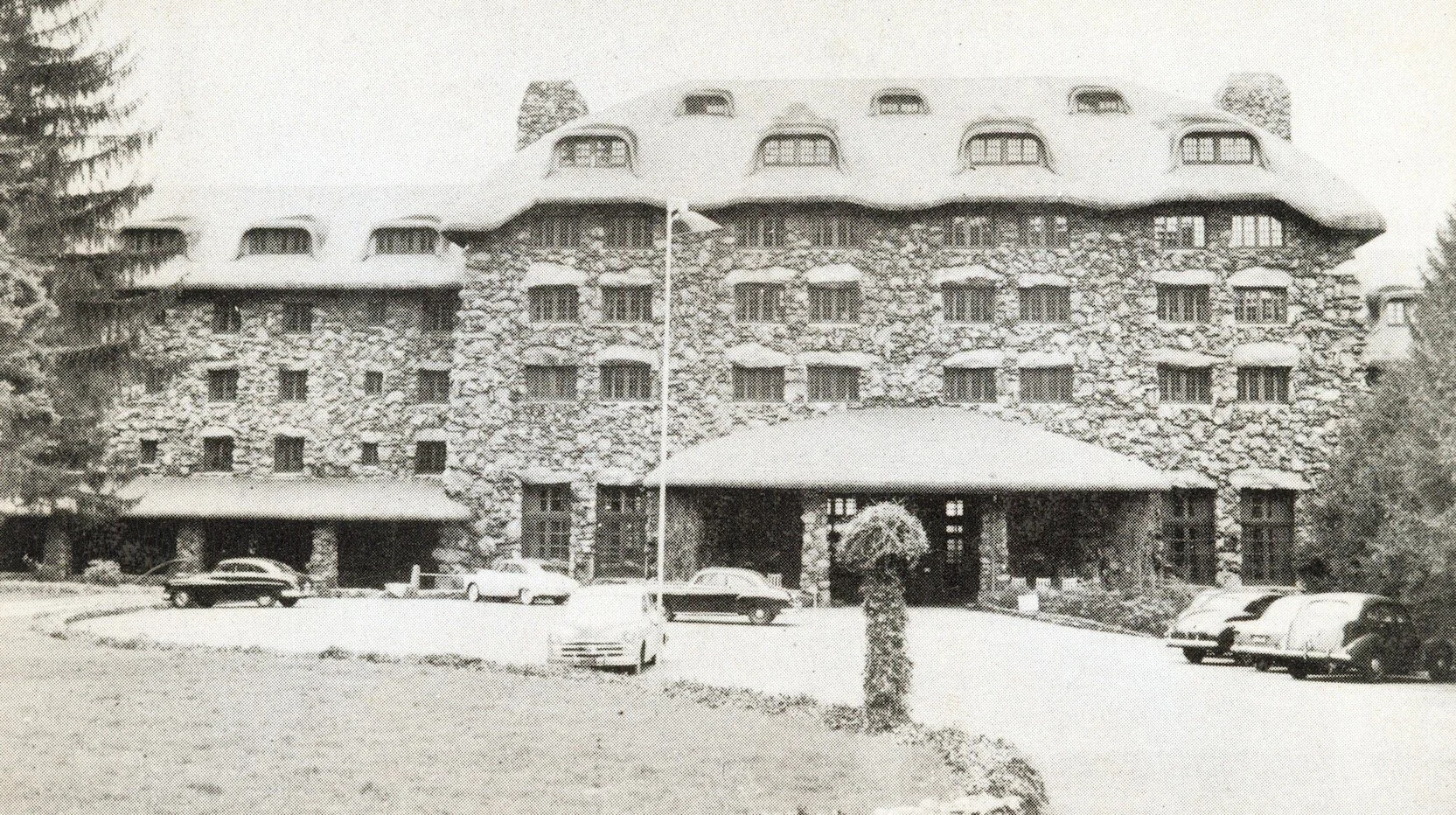
I was really interested in the story because, in the summer of 1942, this resort in Western North Carolina called the Grove Park Inn, which is this posh resort where presidents stay, was used by the government to hold Axis diplomats and foreign nationals.
I often immediately say "as prisoners of war," but I had a conversation with somebody the other day and they're like, "Prisoners of war is a very specific term for soldiers." So I need to correct that and say they were prisoners, but not POWs like soldiers, because these were diplomats and foreign nationals of high status within the United States. Anyway, the Grove Park became a prison, all intents and purposes.
I set the novel there because I found it a really interesting way to talk about contemporary themes and issues. My main character is County Sequoia, and he is Cherokee. He lives in Cherokee, which is today about an hour away from Asheville, and he goes to work at the Grove Park that summer as a member of the grounds crew.
I started thinking about the possibilities of having this setting-driven novel where the place itself really can take on a life of its own. The Grove Park is pretty magical. The Smoky Mountains are pretty magical. But the fact that I can talk about issues of race and class, culture and citizenship, and what happens when politics change, who is a prisoner all of a sudden who used to be a diplomat, and then you've got a County who is a member of a sovereign nation who comes into play as well. It just really was a fascinating setting, time, and place for me to talk about what I consider contemporary issues.
So when I say I didn't really think about writing a historical fiction novel, it's because I was so focused on how the things that we're dealing with today, really, we have been dealing with forever, and it's just a different lens to look at them.
I always say this is a setting-driven novel first and foremost. Now, the story itself is all fiction, but the fact that the Grove Park served as a site of really a detention center...
WRB: It's very interesting. And within the World War II era, American Indian citizenship was still relatively new. We're only a generation into Native Americans being able to claim birthright citizenship, right?
ASC: Yeah, that's exactly right. I'm so fascinated, as you know, with American Indian legal history, because these issues of citizenship, even when the federal government grants citizenship, that doesn't mean that we're all able to vote in our state elections. There's still problems, right?
Native Americans have served in the U.S. military at far greater rates, percentage-wise, than any other kind of group, even when we weren't citizens of this country. And all of those things I just think are really fascinating and worth exploring.
WRB: That always surprises my students when we discuss the Apache land wars. Indigenous people weren't only fighting against the U.S. Army. There were also Native Americans, including Apache, serving in the U.S. Army.
ASC: There's a place in the book, kind of an Easter egg. I purposefully have a character state something slightly incorrect about our military history, because if you know, you know the real story. The whole point was that this character is just very proud of our military history and doesn't have the facts exactly right.
I bring that up because it's true. With America 250th coming up, we fought on the side of the British, the Cherokee did. What's funny is that all of these institutions have contacted our museum and want to partner for America 250 on exhibits. We have to say, sorry, we can't take any federal money for these because we're not going to tell the story that the U.S. federal government wants to tell about the 250th.
Like you said, different tribes were on different sides during different battles and different alliances. So the history, as you know for sure, is very complicated. It's not a straight narrative… I mean, I think it's important to keep in mind that there are these shifting alliances and there are politics between the different nations and within the nations themselves. To me, that's always why, when I read about Tecumseh, I feel for him. Tecumseh's like, "Do you not get it? We all have one common problem here, and that is the U.S. government coming into our lands."
Meanwhile, there's so much history between the different groups that they're like, "Well, these are newcomers. Who cares about the U.S.?" It's like, I'm really still mad at the Miami, or I'm really still mad at this faction within the Creek, and I'm not going to be able to set that aside.
WRB: Right. And folks did not get that the U.S. was going to be there for another 200 years.
ASC: Yes…. well it might not be there that much longer. So who knows?
WRB: I remember reading in grad school about how young the United States is compared with many Indigenous nations and other civilizations. We tend to see U.S. history as all-encompassing because it's often written from America’s perspective. But if the United States disintegrated in the next 25 or 50 years, it could eventually become a footnote in a much longer history, just another passing empire on the continent.
ASC: I'm so happy you made that point. This is something that I say quite often to people, especially when they talk about how you find hope in this situation, especially as a Native person, and all these things that have happened. My answer is always time. We have a greater sense of time than the United States. The United States is just a little baby in the expanse of the world's history.
I try to... I mean, I get mad on occasion about things that are going on. But I think that's where hope can be found: we have survived so much more over such a long time that it gives a better perspective, I think.
WRB: At our recent Appalachian Studies Association panel, we discussed cryptids and ghost stories. I was fascinated by your discussion of how these stories connect the past, present, and future to a particular place, and by what you said about the Raven Mockers. You mentioned a specific quote, and I apologize I can’t remember who said it, but could you talk about that a little?
ASC: Tom Belt, who is a member of the Cherokee Nation of Oklahoma but has lived with the Eastern Band for decades, most of his adult life. He's a fluent speaker, he's a scholar, the list goes on. Genius kind of guy.
Anyway, I presented a quote from him that he had just said to me one time: "That's the thing about ceremony. It must be in the right place, at the right time, and for the right reason." And I think that's so applicable to storytelling in general. It's applicable to anything we can consider a ceremony for our lives, and I think storytelling is.
If you start thinking about your own work and questioning yourself, is this the right time for this? Is this story set in the right time? Is this the right place for this to happen? But most importantly, am I writing this for the right reason? I think work is just so much stronger if we can go through that process. Now, we have fun when we write stories, and it doesn't have to be real serious, but those are three grounding rules that I really appreciate.
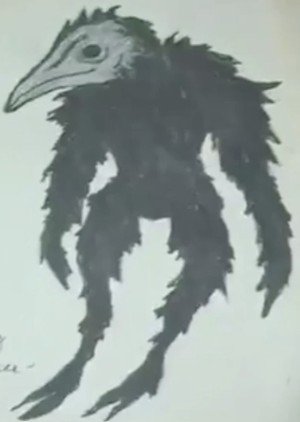
The Raven Mocker story that I wrote for the North Carolina collection that Ed Southern edited is a contemporary retelling of this story we have about these figures that prey on dying people and steal what's left of their soul or their energy. By doing so, they kind of replenish themselves. It probably is similar to vampires in that way, although there's no blood drinking or whatnot.
They do appear in their natural form as giant ravens and can fly and things like that, but they can also shape-shift and look like human beings. There are medicine men who can ward them off, but that's it. If I had a Raven Mocker at my door, I'm toast, right? Because I don't have the medicine to ward it off, and it is an indication that I'm dying if they show up.
The story that I included was about a later middle-aged man who had been doing storytelling for schools as a performance. Really, the underlayer there is how soul-sucking that can be, performing your culture all the time for these audiences. They want it at a certain time of year, and there are all these expectations around that. So after his performance, as the car is leaving, he runs into these Raven Mockers and finds himself being chased by them.
He's confused because he thinks he's a healthy guy, right? But they remind him there's all kinds of ways to die. And there's some humor in it too, because one of the things that I talk about are our core values as Cherokees, and humor is a core value. I think even with the most serious issues and topics, we tend to weave a little bit of humor in when dealing with those.
WRB: I've been curious about this because it seems like cryptids and folklore are really having a moment in the 2020s. Why do you think that is?
ASC: Its a great question. I don't know the answer to it. I do know that, especially for Native American literature, contemporary Native literature, there's a lot being published around Native horror. There's the collection that Shane Hawk edits, the second one's coming out now. There's Stephen Graham Jones, who is incredible. I could go on and on.
As a former English teacher, one of the theories is that people have a greater appetite for horror and things when things are going well. So I'm wondering if things aren't really going well right now. I wonder if we're going to take a downturn from horror or not. I don't know.
I think there's also this theory that it's a way of dealing with really bad things without it maybe buffering them in a way, right? So instead of, "Oh, I've got to read this news article about how terrible the world is," over and over again, this puts a little bit of distance and still kind of captures the horror of the world, but doesn't feel so personal to us. I don't know if these are all theories.
I have no idea why there's more, but I agree. I think I see a lot more. I would secretly wish I could write more horror, maybe have more publishing opportunities, but I don't know. Do you have thoughts on that? I'm curious what you think.
WRB: I mean, I'm just a historian, right? So I say this all with a grain of salt. I read this book a long time ago about the classic MGM European monsters— like vampires, werewolves, and zombies— and the writer did a class analysis of them. They wrote vampires are the upper class, the rich. Werewolves are the bourgeoisie because they're normally fine, but every once in a while they go wild and you have to be careful with them. And zombies are the peasants, the proletariat. You have to always be watching them. By themselves they are relatively harmless, but as a mass, they can overthrow a society.
This person had this whole idea that these stories were a way to navigate class anxieties. I really took that to heart and thought, "I think that's smart." I think there's a lot to say there that's true, at least in how we tell these stories.
I think right now the U.S. is struggling with its national identity in a way that isn't unique. The U.S. has struggled with its national identity in the past, but it is specific to this moment. For a lot of liberals, this myth that the U.S., after World War II and after the Civil Rights Movement, was on an ascension toward being a more perfected democracy, I do think the Tea Party and then Trump really shattered that. It shattered the myth of the liberal nation for the United States and made people realize that, at the bedrock of the U.S., there's genocide and white supremacy in a way that writers of color, leftists, and feminists have been saying all along.
And so I think cryptids, in a way, are monsters of a region. They're not seen in the same kind of universal light as a vampire. I don't know of stories of a Wendigo appearing in China. I don't know of stories of the Grafton Monster being in Argentina. And those are just Appalachian examples.
So, as we struggle with an overarching national story and identity, I think cryptids step in and fill a void. They are monsters of locality, and as we try to piece together who we are, we fall back on the local to see who we are.
I guess another way to say it is— it's a way to go into the regions themselves and be like, "What is at work here in people’s thinking?" In this composite of a nation, you can look at the specific parts of it. How are we producing the same kind of horror over and over again? I don't know. That's my thoughts.
ASC: Oh, yeah, that's really interesting. It had me going through the Encyclopedia of Cherokee Monsters. I don't know. I think it's a really interesting conversation. I had never heard that explanation about the social classes for those three major examples, but that does make a lot of sense.
And it makes sense that in a society that has classes and focuses on that, and I think about Cherokee culture, traditionally, we don't have classes. So I wonder if our monsters function differently because of that. I don't know. I think we've got a dissertation on our hands or something.
WRB: When I go out West and hear stories about Kokopelli, or when I go to India and hear scholars talk about their myths, like the great serpent and what it does, it would feel weird to take those stories and apply them somewhere else. It would be Orientalism at the highest degree.
But Greek and Roman mythology gets treated differently. The white Western world tries to make those universal stories, and to a certain extent, it does that in the United States. They're told so often and forced on so many people that Hercules becomes an archetype.
When you go to a region and hear a story about the Grafton Monster or the Legend of Lady Bend, it is so place-locked. It's a haunting of that area, and only people from that region really understand it.
So as we grapple with what it means to be a global community, and as globalization isn't working the way we thought it would, it's a way to come into the regions and try to understand the fears and anxieties of a place and how they express themselves in a broader global context.
ASC: That's a great point. It really is. It can be a tool for studying even the political pathway, because politics are so fundamentally driven by fear on any side, right? If you can understand the roots of those fears, which our horror stories do, then it may be a path toward understanding our politics. Really interesting. We might solve all the world's problems here today, Wesley.
WRB: [laughing] We will. We just need five more minutes and a TikTok account.
ASC: [laughing] We will.
WRB: Shifting gears, is there anything happening in Appalachian literature right now that you're especially excited about?
ASC: Well, I'm going to take it even more specific with Cherokee literature.
I started an initiative with the Museum of the Cherokee People, our museum here, to create the Confluence Indigenous Writers Workshop series. What that is, briefly, is bringing in Indigenous writers to work with our Indigenous community who are interested in writing, whether it be all the way through publication or just writing for themselves. It's about bringing the opportunities home instead of always having to go out to find them and being the only Native person in the room.
I'm really excited about how Confluence continues to evolve. We talked about Shane Hawk. He's coming next week along with two other incredible Indigenous writers, Deborah Kafa and Vanessa Lilly, in partnership with Western Carolina University's literary festival. We'll bring those writers to Cherokee for a panel.
So maybe that's what I want to say to the world. There's all kinds of opportunities for partnerships because funding is so tight right now, as we all know. When we can work together to encourage institutions to support Appalachian and Native authors in a cooperative effort, it also serves the community, not just the college or university. I think there's a really important opportunity for that.
And I just can't keep up with Appalachian literature. There's something new every day that's amazing and wonderful, nonfiction and poetry.
WRB: Coming from Appalachian Studies this year, they said it was the largest conference we'd ever had, and it definitely felt it. There's just so much happening. But I really love that, at the same time, the Appalachian intellectual and artistic community still feels very much like a community. There are poets, sociologists, philosophers, and teachers from all these different backgrounds, but you walk into a panel and know most of the people. Even though it's this huge field, it still feels connected. I think it's a really exciting time to be working in Appalachian literature and culture.
ASC: Yeah. And I think one of the reasons why that happens, which really feels unique to Appalachia, is that we all are always students, even when we're teachers. You can be presenting on a panel one minute and then the next minute you're in the audience. I do feel like all the, I don't know if you want to call them intellectuals in Appalachia, don't put themselves on a pedestal and say, "I'm just here to tell you things, and then I walk away."
It always feels like people are constantly learning and sharing, and not on some kind of hierarchy.
WRB: Well said. Well, thank you again for your time! Its great chatting with you again.
ASC: Thank you!