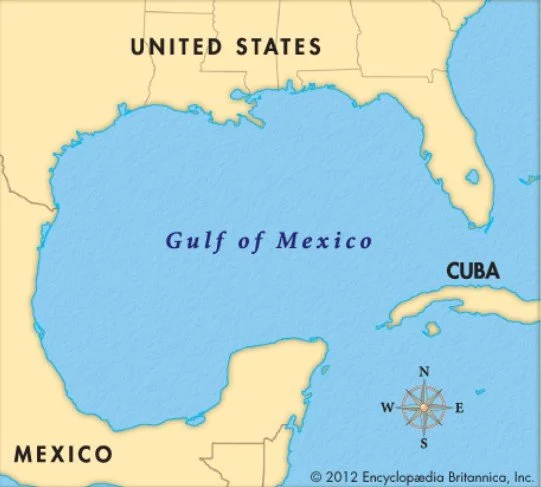
In fall 2026, shortly before the 2026 midterm elections, North Meridian Review managing editor sat down with Will Dahlberg to discuss his recent departure from a WBHM. Dahlberg, the former Executive Director and General Manager of WBHM, Birmingham's NPR member station, resigned in late 2026 following a dispute with the University of Alabama at Birmingham (UAB), the station's license holder, over journalistic independence and editorial oversight. The conflict centered on Alabama legislation requiring state agencies and public universities to refer to the Gulf of Mexico as the “Gulf of America.” Dahlberg viewed the requirement as governmental overreach and a threat to journalistic autonomy and First Amendment principles. When station leadership sought clarification about the law's enforcement and whether journalistic organizations would be exempt, UAB administrators maintained that station employees, as state employees, were required to comply. Dahlberg refused to establish mechanisms for monitoring employees’ language, arguing that doing so would undermine the station's independence. He ultimately issued a public letter without UAB's approval, concerned that institutional review would dilute its message. Shortly afterward, he was informed that his resignation had been accepted.
The following interview has been edited for clarity and length.
Wesley R. Bishop: Thanks for taking the time to meet today.
Will Dahlberg: Thank you.
WRB: Can you start by telling us about yourself and your previous position?
WD: I've lived in Alabama for 15 years now. I actually moved down here on the 10th anniversary of September 11th. I only remember that because I drove to New York City, and there were no cars on the road. I listened to NPR's anniversary coverage of September 11th for the entire drive down. Briefly, my background: I was born in upstate New York and grew up in Vermont. I went to undergrad in Ohio, where I studied history and classics, and then went to graduate school at Dartmouth in New Hampshire. For a brief period, I thought I wanted to work in higher education and student affairs. I did that for a while before realizing I hated it. I'd been a writer, in some form, since birth, but I got into journalism and radio in high school. I wrote for the school newspaper, and we also had something that's hard to call a radio station. We ran PAs, made announcements, and did all those sorts of things. Then, in college, I worked at the college radio station, WHRM, rest in peace, at Hiram College. I eventually moved to Birmingham. Before that, I'd worked as a print journalist for the Journal Opinion, a newspaper on the Vermont-New Hampshire border. When I moved down here, I was finishing my graduate thesis and started looking for the local NPR station. As it happened, I recognized the news director's name. I'd known her through my reporting for Marketplace, so I reached out, more or less blindly, and said, "Hey, I'm finishing my graduate work. I have this journalism experience, and I'd really love to either volunteer or learn how to write for radio."
I'd grown up listening to public radio fairly regularly. In fact, at my first actual job, public radio was always on. I worked at a piano and organ restoration business, and our boss not only made us listen to public radio all the time but also made us donate. He basically said that if we were going to listen, we also had to contribute.
WRB: [laughs] My mother in-law is like that. Says if you are going to listen, then you need to help pay for it.
WD: Yes! All that is to say, I walked through the doors at WBHM as an unpaid intern, learned how to host and write for Morning Edition, and basically stuck around until I was hired in June 2013 as the membership manager, overseeing all of the station's development operations.
And as one thing led to another, by 2022 I had become the organization's full-time executive director. I served in that role until end of September 2026.
WRB: I apologize but, I just don't know how this works. Are you working as a journalist, or are you overseeing the offices and fundraising? What does your day-to-day job actually look like at the station?
WD: As executive director and general manager, I was leading WBHM, which is an NPR member station. NPR is affectionately referred to as the mothership, as it were. But public radio is a very decentralized system. There are public radio stations that are community licensees and don't have anything to do with NPR. Then there are NPR member stations, more than 200 around the country. Each one is intentionally designed to serve its local community based on its needs and a number of other factors. At WBHM, I actually started as a journalist. I worked as a freelancer and an announcer, and I continued doing some of those things along the way. Now that I'm no longer there and have had a chance to reflect on it, I can say that I started out wanting to pursue journalism, but I fell down another rabbit hole because I was too good at fundraising and operations.
I occasionally still did some announcing and freelance work. But from 2013 to 2018, my job was running the station's membership and development portfolio. Between 2018 and 2022, I was deputy director, overseeing basically all operations except the newsroom, which the news director continued to manage. I also served twice as interim executive director before taking on the position full-time in 2022. My day-to-day work involved overseeing fundraising, operations, engineering, and programming, which is separate from news, even though the two sometimes overlap. I was also responsible for leading the organization's mission and direction and overseeing our public service. A lot of my work, beyond fundraising and working with donors, involved supporting an incredible newsroom that didn't need a lot of management. I never told them what to cover or anything like that. Much of my job was figuring out how to talk about our public service and the needs of our community.
The newsroom has its own vision. My job was to help them carry it out, whether that meant providing resources, making connections, or offering other kinds of support. Beyond that, a lot of my work involved maintaining relationships with our partners, including NPR, the Associated Press, American Public Media, and other organizations, as well as managing our relationship with our license holder, UAB.
WRB: So WBHM is as an NPR station? Is it NPR affiliated?
WD: WBHM is a member organization of NPR. UAB holds the station's broadcast license with the FCC. If you look at the radio dial, you've probably noticed that at the very ends of both the low and high ends of the spectrum, you'll find noncommercial media. That's the portion the FCC set aside for that purpose. A little more than half of the public radio stations in the country are licensed directly to universities or educational institutions. That can include school boards and other entities as well. I can point you to a source to fact-check that figure if you'd like. The vast majority of the remaining stations are community licensees, meaning they're licensed to a local board.
A lot has changed behind the scenes over the past year with federal funding going away. There were federal grants that stations applied for, and information from that process, along with audits and other factors, was used in calculating how much NPR charges stations for its programming. It's a brave new world in public radio right now.
WRB: Was this DOGE related?
WD: This was because of the Alabama Congressman, Dale Strong, who filed the bill about the Corporation for Public Broadcasting. I don't know what the cross pollination with DOGE is, but same people in same rooms.
[In February 2025, U.S. Representative Dale Strong (R-AL-05), who represents the Huntsville area, introduced the No More Funding for NPR Act of 2025, legislation intended to prohibit federal funding for National Public Radio (NPR). Strong argued that NPR exhibited political bias and received excessive taxpayer support. In June 2025, he also voted in favor of rescinding $9.4 billion in federal spending, including more than $1 billion allocated to the Corporation for Public Broadcasting (CPB), which supports public media organizations, including NPR and PBS.]
WRB: That is frustrating… were you able to advocate against this? What was the sentiment around this legislation at work?
WD: UAB has their own legislative people which handles these relations. Which was frustrating because a lot of fellow stations around the country maintain those relationships directly because no one can better speak on behalf of the station than the people at it versus the institutions.
WRB: In my experience as an academic, and you correct me if you think I'm wrong here, I often find the liaisons for universities to government are not about relationships. They’re not about challenging in any productive way. They are about compliance. They either meet behind closed doors and try to cajole them, but often it is more so they you don’t get in trouble with powerful people.
WD: I would concur with that.
WRB: So you don't have an advocate, right? You don't have people advocating for public media policy or keeping you informed about legislation in a way that would serve your interests. Even the best representative can't be an expert in every field. Instead, they often rely on a public relations representative or lobbyist from an organization who tells them what that organization wants them to hear.
WD: Yeah. I found it personally frustrating, although I don't have any great desire to go meet with lawmakers. Once or twice a year, I would travel to NPR and meet with other general managers. Usually, the final day of those meetings involved visits to Capitol Hill. Part of that was meeting with your representatives, whether they supported public media or not, to show your face, talk about your mission, and explain how you serve the community.
We were talking about this before, but so much of Alabama is relationship-based. It's a lot harder for Senator Britt, Senator Tuberville, or someone else to belittle or defame you when you're sitting face-to-face, talking about their constituents and the fact that you're both supposed to be working for the public good. So not having those opportunities felt like a loss, although I understand why institutions are very careful about that.
WRB: It's the corporatization of the university. They treat it like a corporation, where everyone is a worker on the floor who doesn't get to speak. A perfect example in Alabama is the series of laws that have been passed affecting universities, from what can be taught to how faculty senates operate. At no point, and I don't think this is true at any university, but certainly not at mine, have we been afforded the opportunity to speak directly with the legislators voting on these measures and explain why they are bad ideas.
That includes everything from explaining that you can't teach American history accurately under the restrictions imposed by a particular bill to explaining that legislators don't understand what a faculty senate actually does. Faculty senates are largely concerned with curriculum, so we're going to have to reinvent how those processes work. I don't think there's anybody on the board of trustees who wants to deal with curriculum changes every other week.
I genuinely don't think legislators understand what a faculty senate does when they hear the term. And instead of universities preparing themselves for a difficult conversation and making the case for why these measures will be harmful, they’re afraid. They’re worried about the consequences, so they just roll over.
So tell me what's happened. You mentioned that you don't work there anymore. I first saw your open letter on Instagram, protesting the decisions being made and why you were resigning. It is why I reached out. Can you explain what's been going on?
WD: So, as it relates to the whole Gulf of America debacle, or whatever word you want to use to describe it at this point…
WRB: We’ll just say Gulf of Mexico.
WD: I will say, and I've been quoted elsewhere saying this and have posted it publicly, that my frustration with this situation is something I can speak about more freely now that I'm no longer leading an organization. Yes, I think the name is idiotic, or whatever word you want to use. As someone who appreciates history, it bothers me. We've referred to this body of water by the same name for hundreds of years, and now, at the political whim of one person, we're making these changes.
That said, my frustration with the whole situation is really about the control of the press and freedom of speech. It flies in the face of what I've been taught and how I've worked for years. It also conflicts with my understanding of the relationship between our license holder and the station, particularly what UAB said it could control, and the direction that relationship seemed to be heading, with increasing micromanagement.
Our managing editor, Andrew Yeager, and I had been monitoring the bill that failed during the previous year's legislative session. Then, early in 2026, when it became clear that the bill was going to pass and that Governor Ivey would sign it, we started asking questions. We tried to get answers from UAB and other stations about how the law would be enforced and whether there would be exemptions for organizations like ours.
We struggled to get clear answers. Eventually, what we were told was quite plainly: “You're state employees. This is the law. You have to follow the law.” There were multiple conversations and a good deal of back-and-forth as we tried to get clarification, but we started encountering considerable resistance. The response was essentially, “We've told you this is the law.”
There was a lack of willingness from anyone to come to the table and explore the difficulties this presented for us as a news organization. Nobody seemed willing to discuss how the law would be enforced or what the consequences would be if someone chose not to use the new name.
That went back and forth quite a bit. Ultimately, I reached the conclusion that, in my position as executive director, I could no longer trust UAB to defend the station's rights, freedoms, and autonomy as a journalistic organization. I also felt I could no longer defend my team in the way I needed to be able to.
I encountered resistance on another issue as well. One of my core principles in leading a nonprofit news organization is transparency, especially with our donors and listeners. We talk about trust all the time. And if we get something wrong, we acknowledge it and make it right. That's simply fundamental to what we do.
It became very clear to me that UAB wasn’t willing to entertain a conversation about the law or its implications. The attitude was essentially, "What's the law? It's been put into effect. You just go along with it. There's no need to talk about it. People know this is happening." But they don't.
So I put together the letter and sent it out. Ordinarily, something like that, which UAB considers a press release, would go through a review process. I sent out fundraising communications and other materials without their review, but I knew that something like this would typically be expected to go through Marketing and Communications.
WRB: Of course.
WD: I chose not to do that because I didn't believe they would leave the letter intact. I thought they would strip it down. So, yes, that letter went out at 11:30 on a Friday. I happened to be off for the rest of that afternoon, but by Monday I was told that my resignation had been accepted.
Before releasing the letter, though, I had already approached UAB because of the direction things were heading. Some of this was tied to my new boss and the fact that the station had been moved into a new division. I told them that I saw things going in one of two directions. Either they were going to put me on a performance improvement plan and eventually work me out, because there were a number of issues on which I was digging in my heels, or we could agree to a mutual separation. Under that arrangement, I could help gather things together, make sure there was a smooth transition, and then leave.
They chose to go a different route, and so here we are.
WRB: So, just to clarify— Donald Trump signs an executive order changing the name of the Gulf of Mexico to the “Gulf of America.” The extent of his legal authority to do that is debatable because, outside of certain federal agencies, no one is actually required to use one name or the other. I can call the Appalachian Mountains the “Samantha” if I want to. No one can stop me.
You can’t simply dictate what everyone else calls a geographic feature. Federal agencies may be required to use the new name, assuming the order isn’t successfully challenged and overturned, but that doesn’t extend automatically to state governments or international organizations. There’s no legal requirement that Google Maps, for example, adopt the change. But some state governments, Alabama among them, jump on board and pass their own legislation declaring that the Gulf of Mexico will henceforth be called the “Gulf of America.” The law directs state agencies, including public universities, to use that name. But there’s no enforcement mechanism written into the legislation, correct?
So even if a public employee continued to call it the Gulf of Mexico, there’s no immediate mechanism for the state to penalize them under the law. The concern, though, is that state officials could use the issue vindictively. This is part of a broader culture war, and they might seize on it as an opportunity to cut funding to public education, an NPR station, or some other institution they’ve already said they want to target. It's almost as if you’re identifying yourself as someone they can go after. Is that basically what’s happening?
WD: Yes, essentially. You hit the nail on the head. I've had plenty of people, especially on Threads and Facebook, say things like, “Well, Trump didn't make it a law,” and so on. I've had to explain that, if you were paying attention the Alabama state legislature made it law here! And we have a border on the Gulf of Mexico, right? This is something our reporters and hosts have to deal with all the time, especially when there's a weather event. One piece of feedback I've received during all of this— and something that was considered and the newsroom may be doing now— is that people can simply refer to it as “the Gulf.”
[Dahlberg stops and thinks for a moment.]
WD: Sure, that's fine and understandable. But being required to use a particular name is another matter. In my opinion, what this bill has done is put places like UAB in a position where they feel compelled to create enforcement mechanisms. They don't want to put any part of their billion-dollar enterprise at risk because their public radio station is choosing to follow AP style or NPR's standards instead.
At UAB, we were asked at the station to develop methods for ensuring compliance and tracking whether employees were following the requirement.
WRB: Wow. So if a reporter goes rogue and says Gulf of Mexico, you were the one to come up with a punishment?
WD: Exactly. We were asked to come up with that ourselves, and I held firm on this. There was a lot of back-and-forth over it. I refused to have anyone on my team or me create that document, or, as I've described it, the noose to hang ourselves with. If this was something UAB wanted, then UAB needed to create it. I was very clear and direct about that, and I met considerable resistance.
WRB: From who? University Legal?
WD: Not directly from University Legal, but from my boss at the time.
WRB: So, more the chain of command of employment at the university?
WD: Yes. And it was, in my opinion… [thinks] The folks in legal did understand all the gray areas. They understood the predicament it put us in. Outside of legal, the folks I dealt with didn’t seem to understand the nuances of how journalism works, how editorial independence is needed.
WRB: Let me ask you this: Based on your experience with university leadership, do you get the sense that institutions are putting themselves in a position where they may not face immediate consequences for complying with these measures, but could face a reckoning several years down the line? We may look back and see that universities have significantly violated people's civil liberties. I mean, consider everything from crackdown on the protests at Columbia to harassing student journalism. At the University of Alabama, for example, two student newspapers were suspended. Most likely because of their racial and gender identities. These kinds of actions could expose universities to significant lawsuits on the basis of discrimination and violations of First Amendment rights.
WD: I think we'll see those lawsuits. But even before that, and I say this as someone with multiple degrees who really believes in the power of higher education, I think this has eroded a great deal of trust and respect for these institutions in ways that are deeply concerning. As someone who is also about to send a child to college, I'm thinking about things very differently than I would have before. So much of this runs counter to the spirit and philosophy of what higher education is supposed to be.
WRB: And where does it stop?
WD: Exactly.
WRB: That's my concern. It’s less about the name of a body of water. It’s about compelling people to use certain language and threatening them to do so. And if they don't comply with the letter of a very vague law, it’s unclear what the consequences might be. But it is understood there will be consequences. For not committing a speech act that is racist in its motivation. And I don't think UAB's leadership is wrong to assess that there are people who want to undermine public education and are looking for reasons to do so. We saw something similar more recently with PBS and the Alabama Public Television Board, where there were people who put up a fight, folks like Pete Conroy, are eventually singled out for removal from places like AETC.
[Pete Conroy, a former member of the Alabama Educational Television Commission (AETC), was a critic of efforts by conservative members of the Alabama Public Television governing board to sever the network’s longstanding affiliation with PBS. The dispute intensified in 2025, following federal funding cuts and conservative accusations that PBS programming exhibited ‘political bias.’ Conroy opposed efforts to end the PBS relationship, arguing that the network’s educational mission and public support should not be sacrificed to political pressure. He also challenged the board’s subsequent decision to commission expensive public opinion surveys, questioning the selection of Republican-aligned polling firms, the use of reserve funds, and the transparency of the process. In September 2026, Conroy voted against a $39,500 contract with the Republican-oriented polling firm Cygnal, warning that the board was undermining public trust. Governor Kay Ivey subsequently replaced Conroy and four other commissioners in October 2026, following more than a year of controversy over the network’s direction.]
WRB: So I don't think UAB is wrong to assess that these political actors are vindictive, particularly government officials who are already looking for reasons to cut public programs. But I guess my question is: What do you think is going on here? And I'm asking you to play a bit of armchair psychologist when it comes to university leadership. Do they actually believe in what they're doing, or is it more a matter of saying, "Please don't hurt us"? And then, when it comes to government officials, from Governor Ivey to the state legislature, why are they pursuing this right now? What's driving it? What do you think?
WD: From a public perception standpoint, a lot of this seems to be about favoritism and catering to the current president and his wishes. Some people might see that as being a lapdog, or something along those lines. I suppose that's the rationale, but in my mind, it's not a very good one.
I do think there are instances where government can advocate for changes in language or terminology in the public interest. We occasionally revise language in the DSM-4, for example, or change how we talk about suicide and other issues. But this is different from those kinds of situations, at least in my view.
WRB: That’s interesting. So you think there's a strong possibility that Governor Ivey, in particular, and some members of the state legislature are doing this not because they necessarily care one way or the other, but because they see it as an easy way to curry favor with a very powerful person? Even if it doesn't earn them a favor, it might at least keep them out of harm's way. It’s essentially giving in to a bully. They see someone who has the power to hurt them and who may ask for things they can't realistically provide. But this is something they can do, so they do it. It's the same logic as putting his name on the bridge. They don't particularly care, and he didn't secure the funding for it, but if putting his name on it makes him happy, then why not? Let’s just do it and move on.
WD: Yeah. I mean, when you have a leader who is attracted to whatever the shiny object of the day happens to be, and you're one of the first states to raise your hand and say, “Yes, I'll jump in the water,” he likes that.
WRB: I think that's what you’re witnessing with the Kennedy Center. University leadership is right to recognize that Trump, along with his acolytes who genuinely believe in what he’s doing, are willing to bulldoze just about anything. Nothing is sacred. There’s no apparent reason the Kennedy Center needs to be shut down right now other than the fact that people aren’t giving him what he wants— his name on it and the ability to control it. And Trump et. al. is simply saying, “Well, then, no one can have it.”
[The John F. Kennedy Center for the Performing Arts has become the center of a political and legal dispute following President Donald Trump's takeover of its board of trustees in 2025. Trump and his allies voted to rename the institution in his honor, despite federal law establishing it as a memorial to John F. Kennedy. A federal judge ruled that the renaming violated congressional law and ordered Trump's name removed. The conflict has since expanded to plans for a two-year closure for renovations, which Trump has linked publicly to the effort to recognize him on the building. Supporters of the closure argue that extensive repairs are necessary, while critics, including Democratic board member Representative Joyce Beatty, contend that the decision is politically motivated and that the board has not adequately considered alternatives that would allow performances to continue. As of November 24, 2026, the Trump administration is asking a federal judge to allow the two-year closure to proceed. The dispute raises broader questions about presidential influence over cultural institutions, the independence of their governing boards, and the use of public institutions for political recognition.]
WD: “I'll destroy it, then.” Correct. Going back to your question about UAB, the position I was in required me not only to maintain the relationship with UAB on behalf of the station, but also to balance that relationship with our integrity as an organization. We needed to grow, remain sustainable, and fulfill our mission, while also being careful not to cause harm to the university. I understood the importance of that. But there’s a flip side to that relationship. If the university is doing things that, in my view, run counter to its own institutional principles and to the principles of journalism, then those actions deserve to be called out. I see that as a fundamental right of what we do, whether the university likes it or not. UAB, however, would interpret things differently. Their position was essentially, “We don't have editorial oversight of the newsroom, but we can weigh in on every other part of the station.”
WRB: Being able to tell you what you’re going to say, that seems like pretty big editorial control.
WD: The closest parallel in my experience at the station has been the anti-DEI legislation and the subsequent pullback of that work. Initially, I didn't think of these situations in the same terms, but the DEI work had been really important to our organization. We had been doing it well before George Floyd and the pandemic.
Specifically, here in Birmingham, WBHM, which turns 50 this year, has historically underserved portions of its broadcast area. Through no intentional fault, the station had often catered to middle-class, predominantly white listeners and donors from communities over the mountain, places like Hoover and Vestavia Hills. But we're in a majority-Black city with a long history of civil rights activism and anti-racism. In my opinion, and this was something I raised during my interview for the position, having worked at the station for a long time, if we're truly going to be a public radio station that serves all of Alabama, we have to approach that mission intentionally. The DEI work, regardless of whether someone agrees with its underlying philosophy, made us a better station. It pushed us to go into communities where we hadn't previously been, tell stories we hadn't told, and reach potential donors in areas where we simply hadn't shown up before.
I understand what prompted the pullback and the broader pressures behind it. We saw the ripple effects at institutions everywhere. But for WBHM specifically, it was deeply demoralizing because we had put so much work into those efforts. I can't say we unlearned everything we had learned, but we were also instructed by UAB to remove certain material from our website. We were also a station that had signed on to something called Public Media for All, which included actual accountability principles for organizations like ours. It gave us concrete goals to work toward and standards by which to measure our progress.
WRB: And you had to remove that?
WD: Yeah, we had to remove that. So in my mind, that was uncomfortable, but I was willing to find a way internally to work around it. Now this latest thing? It is a step beyond that.
WRB: Right, because there's a difference between having a mission statement, which you could argue doesn't matter one way or the other. You can be anti-racist without having it on your website. In fact, there's even an argument to be made that you don't need to virtue signal that you're doing this. Just go do it. That's very different from being told that you must do something, that you must now use certain words or face punishment. The government is saying, “You must say these words.” And if you're willing to go along with that, where do you draw the line?
Backtracking a bit, I want to ask what you think about the attempted renaming of the Gulf of Mexico. I want to offer my own thoughts first, and I'd be curious to hear yours—
I think this is all just racistm. I think there’s a tremendous amount of racism that this president has normalized and made acceptable, particularly toward Latinos and, specifically, Mexico. He began his presidential career with an appallingly bigoted speech about Mexicans. So this idea that we can’t even refer to something as Mexico, that we're going to single out that word, strikes me as incredibly racist.
It’s especially striking in the wake of the right's outcry over changing historical names or removing statues. We're told we can't take John C. Calhoun's name off a building because of “history,” but we can rename an entire body of water because we don’t like Mexico. You hear people like Marjorie Taylor Greene making claims that Mexicans are drug dealers and rapists, and so on. That’s a white supremacist argument. To me, that makes this a white supremacist action. And if you're going along with it, you're aiding and abetting white supremacy.
[Former Congresswoman Marjorie Taylor Greene (R-GA) became one of the most prominent congressional champions of the “Gulf of America” campaign, introducing legislation to codify the name change and defending it through appeals to American nationalism and claims of national ownership. Greene also connected opposition to the renaming with rhetoric about drug cartels, border security, and undocumented immigration, invoking familiar anti-Mexican stereotypes in the process. Her advocacy placed the renaming within a broader political campaign that portrayed Mexico and Mexican immigrants as threats to American identity and security. In that context, the proposed name change was not simply a matter of geographic terminology but part of a larger nationalist and anti-immigrant political message.]
WD: We are very much aligned in our thinking. To me, there's no question that we have a racist in the White House. He doesn't hide it. We saw it on video today, when he was talking about the American military prisoner involved in the Fort Hood shooting. He was discussing the names he has called him and said something along the lines of, "Well, I call him Muhammad just because I want to." I mean, that's coded racism, plain and simple. It's an expression of hostility toward Middle Easterners.
[The Fort Hood shooter was Nidal Malik Hasan, a U.S. Army psychiatrist who opened fire at Fort Hood, Texas, on November 5, 2009, killing 13 people and wounding 32 others. Hasan, who was born in the United States to Palestinian immigrant parents, was convicted by a military jury in 2013 and sentenced to death. In October 2026, President Trump approved his execution by firing squad, initially endorsing a plan to livestream it before reversing that decision. Trump's use of “Muhammad” as a deliberately imposed substitute for Hasan's name, reportedly explaining that he called him that simply because he wanted to, invoked a Muslim-associated name as a racial and religious slur. The remark drew on the broader practice of conflating Muslim identity, Arab identity, and terrorism, reducing Hasan to a religious stereotype rather than addressing him as an individual.]
WRB: And not very well coded. It’s just pretty explicit.
WD: Yes, yes. Well, that gets into a whole other question about whether he's in his right mind and capable of forming a cogent thought. But, yes, I think these are all examples of what happens when you start trying to control language, control the narrative, and dictate what people can say. These are steps in a direction that, in my opinion, runs counter to our constitutional rights and the very philosophy of who we are as a country. I've tried not to get into arguments with people about this, especially online. But I feel like irony is dead in some ways. One of the things I've said to people is, "I understand where you're coming from, but do you not know, understand, or respect the First Amendment? You cite it in these other instances, so why is this different?"
WRB: This is why I think the argument is being made in bad faith. How can you tell me that renaming Calhoun County, so that it is no longer named after one of the most notorious white supremacists in American history, somehow erases history, but then turn around and say, in the same breath, "We're going to rename a body of water because we hate an entire nation of people"? Why does one supposedly erase history while the other doesn't?
WD: That's a great question. I've wrestled with issues like that for a long time. I once had the pleasure of interviewing Tony Horwitz, who wrote Confederates in the Attic. I interviewed him when statues were either coming down or becoming the subject of public debate. Even he, as an expert in the field, didn't have a definitive answer about how we should deal with these monuments. He landed on what he considered the most neutral position he could offer: there needs to be public discourse, but if a monument is ultimately removed, it should be placed somewhere that people who still want to see it can visit, perhaps alongside an interpretive plaque or other historical context. But, yes, there's a profound irony in this whole situation.
WRB: Well, to me, it strikes me that for many people this isn't actually a free speech issue. I do think there are some who are genuinely concerned about freedom of speech. But what I've found is that, across many social movements on both the right and the left, that's not really the central concern. The underlying issue is racial politics.
For example, when a statue of a slave owner is taken down, the right, often advancing a white supremacist argument, reacts with outrage. Yet, just a few years later, when statues of César Chávez come down following revelations about his conduct, there's little comparable outcry from the right or the left. The response is essentially, "No, he was a bad person. We should take the statue down."
To me, it's impossible to look at those examples and conclude that people are consistently motivated by concern for freedom of speech. What we're seeing is racialized politics. It's a contest between anti-racist politics and white supremacist politics. That's what I see happening here.
WD: Yeah. I mean, I think it is the culture wars. I'm not suggesting that we've ever had a unified moral compass as a nation, but there were things we generally agreed were American and un-American. Those visions seem very different these days.
I often think back to September 11. I was in high school at the time. I wasn't a fan of George W. Bush, but I remember how, in the aftermath of something so horrific, the country came together. I know there can be moments when our nation pulls together and we're all on the same page. The older I get, and the farther we get from that moment, the fewer and farther between those moments seem to be.
WRB: So, before the issue with the Gulf of Mexico, what else was happening that began to raise alarms for you about editorial independence and freedom of speech? You mentioned that there had been a few other incidents.
WD: In 2025, we saw the movement to eliminate funding for the Corporation for Public Broadcasting (CPB) in Washington, D.C., and ultimately the rescission of that funding. Obviously, there was a lot of organizing and advocacy on the public media side in response. In the lead-up to that, UAB, where we were still reporting through Marketing and Communications, was very much telling us, “Let this play out in Washington. Don't be too vocal about it. Don't rock the boat here.”
Ultimately, the vote happened in August 2025, and it was clear that CPB funding was gone and that the organization itself would be shutting down. So the question became: What does our future look like?
That same month, in August 2025, I was told during a meeting one morning, “By the way, you'll be reporting to this new division soon. This gentleman will be your new boss. He really loves public radio. It's a behind-the-scenes kind of change. No worries. It should be good.”
That proved not to be the case. On one hand, this is a struggle for every station licensed to a university. They report through various divisions or parts of the institution. In our case, we were moved into Finance and Administration. The gentleman understood the mission of what we do, but he came in with a very different approach to how we should operate the business side. He also began inserting himself into conversations and asking questions of our journalists.
WRB: Can you give an example?
WD: A journalist once told me that, under the previous administration overseeing the station, they would even ask permission before coming into the newsroom to say hello to people. The concern was that someone might be working on an investigative story involving UAB, and they wanted to respect that boundary.
WRB: Makes sense.
WD: Those boundaries were understood and respected. Now, it was a case of, “I'm over the station. I don't need your permission to walk around in the building.” There was an incident with a reporter where he asked her, “Well, tell me what stories you're working on.” She jokingly responded, “Oh, you can read them when they come out.” He essentially threatened her employment by saying, “You know I employ you, right?”
That ultimately led to her leaving. She left about a month before I did.
It was a veiled threat. She interpreted it that way, and I completely understand why. This gentleman doesn't necessarily have a sense of humor that most people would recognize or understand. There were several incidents like that. I've described it as death by a thousand cuts. Granted, I was glad to have help on the business and administrative side of things, but there were a number of other issues. As the director, I had spent many years being trusted, coached, and encouraged to steer the station. I had the autonomy to determine the organization's direction, and much of that autonomy was gradually taken away. For what reason, I'm not sure. I had received stellar performance reviews throughout my time there. So it felt as though punitive measures were being taken against me without any clear justification.
WRB: Do you worry they are setting up to close the station down completely?
WD: I wouldn't go that far yet, because the gentleman overseeing it is... I think the idea now is to bring the station into closer compliance with how UAB operates, whereas the station has always, to my knowledge, operated within the letter of the law and other requirements.
As an organization, the station operates in some ways like a small nonprofit within the state's largest single employer. There are things we do simply because that's how a public radio station operates, which can be very different from how UAB does things. You see it in something as small as preferred vendors. UAB might order 50,000 of something, while we're ordering 1,000 pens to give away at an event. Those differences can make things complicated. As a manager and leader, I was very much focused on being compliant and finding flexibility wherever we could. But it became an uphill battle for me and my team, especially my leadership group, to continue doing the things we had always done when everything was questioned or scrutinized, or when we were simply told, "Well, we're just not going to do that," without being given an explanation.
Journalists are used to asking questions, and they don't usually give up.
WRB: Any good journalist is going to be independent, right? It's just the nature of the profession. You're not a good journalist if you're not. You have to be an independent and critical thinker, someone who questions everything. That's what makes a good journalist. A good journalist will hold people accountable and won't back down. And you need a good editor to support that.
WD: You're exactly right. I will say that, as we transitioned into that new division and these conversations continued, it became increasingly clear that things were moving in a direction where this no longer felt like the station I had been hired to operate.
I asked both my boss and my boss's boss, quite bluntly, "What are UAB's expectations and desires for this institution at this point? Are you still wanting us to be a news-focused organization, or is that becoming problematic? Would you rather see us focus more on music or something else?" Stations can take different approaches, after all.
But I never received clear answers about what kind of station the university wanted to have, or what kind of station it wanted to be proud of. That was a source of frustration for me and for previous station management. Yes, we're a listener-supported service of UAB, and so on, but UAB has often kept the station at arm's length until it needs something from us or finds it convenient to engage with us. It's a relationship that has ebbed and flowed over time.
WRB: I find this to be an incredibly frustrating moment for institutions in general, particularly in higher education. As a faculty member, I feel that administrators have utterly failed in the stewardship responsibilities entrusted to them. They've inherited these large institutions that people have spent lifetimes building, and they're running them into the ground. They're squandering and dismantling what others have worked so hard to create. You see it across the country, from museums that have been open for centuries, sometimes even predating the United States, to NPR stations and university presses. It's so frustrating to watch administrators who seem fundamentally unsuited to this kind of work. Sometimes I think, you couldn't get a job at Chase Bank, and yet here you are. Please leave, because you're not actually interested in the work of stewardship.
These institutions aren't ATMs. They provide essential services through broadcasting, art, education, and research. We're not here to make you rich.
WD: Right. Its non-profit for a reason.
WRB: Changing topics a bit— In the lead-up to your decision to leave, what was that process like? I think it's important for people considering taking a principled stand to hear from others about how they arrived at that decision. What was your thought process? Did you talk it through with your family? How did you begin to work through the decision, and what ultimately brought you to that point?
WD: Yeah, good question. My family, we're not of means, per se. I grew up on food stamps. I don't want to say I grew up in poverty, but in retrospect, yes, I did. My wife came from an upper-middle-class family here, but she's a career social worker. So I knew leaving the best-paying job I've ever had, a job I'd held for a while and where I was well respected, would be a burden and a stressor on my family. But I was losing the ability to show up and be the leader and manager I knew I should and could be. So there were a lot of conversations with them about what it would mean if we did this, what the implications would be, and so on.
I'm not someone who rushes to judgment, but as I've gotten older, I've learned to ask people, "Am I off base here? Am I thinking clearly?" I try to fact-check myself. "Am I crazy? What am I missing?" In the lead-up to this, I checked with colleagues who are still in journalism, others who have left the profession, people who are retired, and people I really respect and admire. I told them, "This is the quandary I'm in. Am I being too stubborn?" The feedback I received from all those people, who span the political spectrum, was essentially, "Yeah, that's a tough position to be in. I don't envy you." No one directly told me, "You should do this or that." But I couldn't let the situation play out. I've kept my mouth shut about a lot of other things and stayed focused on the mission, but I couldn't sleep at night knowing I hadn't spoken up about this.
To me, it's just a bridge too far. Could I have gone along with the law, found a loophole, and referred to it as the Gulf? Yes. But I'd already endured too many things in the lead-up to this. To me, this just reached a different level.
WRB: You want to stay in journalism?
WD: I would love to stay in journalism. There aren't a lot of opportunities here in Alabama, although I'll be the first to say that this place deserves more. We need more accountability journalism, whether that's keeping an eye on Montgomery, covering educational institutions, or taking on other important issues. Those things are critically important.
On top of that, we were talking earlier about being people who aren't from here but have come to appreciate certain things about the state. I really believe Alabama is an interesting place to live, work, and raise a family. There are a lot of good things about living here, and we're not always able to tell those stories because so much of the journalism is focused on accountability reporting. Never mind the other stories, unless they're about Alabama football.
WRB: Well thank you for your time. I really appreciate it.
WD: Thank you.