“The Reanimated Life of Juan Pablo Calloway,” Short Story, Marc Alexander Valle.
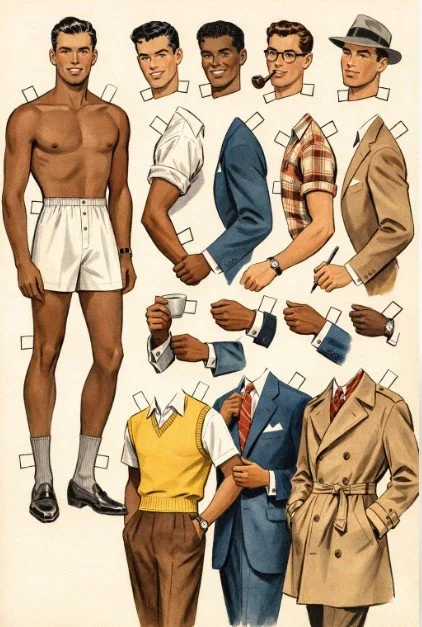
Juan Pablo Calloway, the first and only reanimated man, died on March 24th in San Tortuga, California. He was fourteen years of age (fourteen representing the years since he was created. Juan Pablo was made from the parts of grown men.)
His wife, Lorraine Calloway, said the cause of his death was a fall and subsequent trauma to the head.
Mr. Calloway first made the news in 2012 when it was reported that Dr. Roman Stevenson of Leland University reanimated a reassembled adult human. At first, the medical community did not believe Dr. Stevenson’s claims, and a video of the purported reanimation became a media attraction. However, after Dr. Stevenson explained the process and physicians from various universities conducted a thorough examination of Mr. Calloway, it was discovered that he was, in fact, reassembled and reanimated.
The following year brought not only a wave of media attention but also a storm of controversy. Human rights groups claimed that the reanimation of Mr. Calloway, who was unable to speak or walk at the time, violated numerous human rights statutes and broke several laws.
“He was put together from seven men,” said Nate Giadesco, a civil rights attorney from the Blair-Cummings Law Institute. “All the parts were bought illegally from a mortuary in Santo Mano City in the island nation of Guanaca, and then flown out to the United States in refrigeration units. [Dr. Stevenson] gave him the last name Calloway because he apparently liked the singer, Cab Calloway. He felt that Mr. Calloway was his greatest song, so to speak.”
Still, Dr. Stevenson continued to care for Mr. Calloway, providing him with an at-home education. It was during this time that Mr. Calloway learned to speak, read, and perform basic mathematics.
“He started to walk in just a couple of months,” Vanessa Corrigan, a physician and colleague of Dr. Stevenson at Leland University, said on the phone. “He defied our expectations.”
Other milestones and achievements would follow in rapid succession. At the age of three, Mr. Calloway graduated from elementary school, and by the age of four, he earned his high school diploma. By age five, Mr. Calloway held a part-time job as a movie theater usher and attended classes at the University of Green Hill Falls in Steel Oaks, Pennsylvania. All these exploits were accomplished amid custody trials over Mr. Calloway. The state argued that Mr. Calloway was an adult who could only voluntarily have a custodian watch over his interests. Lawyers for Dr. Stevenson argued that he was still very much like a child, having tantrums and needing someone to tuck him in to bed at night. But by the age of six, court battles still raged on, and Mr. Calloway ran away from the custody of Dr. Stevenson and began his journey hitchhiking and tramping across the United States.
For the following year, Mr. Calloway somehow managed to stay out of the public eye, growing a beard and always wearing a hat or beanie. It was at this time that Mr. Calloway admittedly began to drink more frequently. This would be the start of his struggle with alcohol. At the same time, Mr. Calloway found what he would label “his other drug.” Upon meeting traveling artists in various American metropolises and while hitching rides in train cars, Mr. Calloway took up graffiti art and painting. He would go on to call it the most transformative time of his life, saying, “I saw it all. Abandoned subway tunnels filled with more beauty than the Sistine Chapel, mountain views that few have ever stood on. I even witnessed birth and death on the same day.”
When Mr. Calloway emerged from his absence, the courts had ruled that he was an emancipated adult. He then had access to the money that had been donated to him and began his own life as a painter.
“He needed more than just to find himself that year,” said Dr. Maria Gonzalez, an art historian at Annextown College. “He needed to lose himself. He was made up of all these people, and all those parts had influence over his personality. Alcohol helped him disguise that ugliness. But art revealed the beauty of the universe.”
For the next year, and with his own money, Mr. Calloway went on to open his own studio. It wasn’t much of a success at first, selling only two pieces in the first six months, but it was during this time that Mr. Calloway began to develop his own style and his own ideas. Finding inspiration in graphic novels and primitive street art that he saw during his travels, Juan Pablo developed a genre called Archaic Panelism.
“You basically turn the canvas into a multi-panel comic book page,” said Professor Ernie Dominguez of the Vortman Institute of Fine Arts. “Then you tell a story with primitivist or abstract art. There’s no words, at least not with Juan Pablo. It’s all visual and in Juan Pablo’s case, it really came together.”
In a matter of months, the once-struggling artist became a worldwide internet sensation. Book publications, speaking tours, talk shows, and top 10 podcasts followed. He even graced the cover of Winslow Magazine as their Man of the Year. The cover featured an image of Juan Pablo dressed only in a loincloth with two people tugging at his bleeding arms. The headline read, “Everyone wants a piece of Juan Pablo.” Tanto’s Chicken even sold a ‘Juan Pablo 5-piece Meal,” playing on the popular notion that Juan Pablo was made from five different men.
“Juan Pablo let a lot of people do whatever they wanted,” Andy Ramirez, a close friend, said. “He was just a nice person. He would later tell me that he regretted some of it.”
It was at the height of his fame that Juan Pablo would get further into drinking. Reportedly, drinking a bottle of vodka to sleep every night. His abuse eventually led to an incident of alcohol poisoning, which landed him in the ER for gastric suction.
“He was lonely,” Mr. Ramirez continued. “You have to understand. He had no family except a small circle of friends. And most of his friends were into drugs and drinking.”
After some time in rehab, Mr. Calloway finally got sober and would remain so for the next few years. It was at this time that Juan Pablo stopped doing the media circuit and bought a house in San Tortuga, California. He would go on to focus on his work, publishing his journals and experimenting with other forms of art. At the same time, he met Lorraine Danko, a sculptor from Uxbal City, New Mexico. After six months of dating, the couple married and planned to start a family.
“He didn’t think the fame thing was worth a damn anymore,” says Josh Korwitz, a friend of Mr. Calloway. “He said to me that with all he’d done, he’d still done nothing with his life, and having a child would be his last great achievement.”
Mr. and Mrs. Calloway would try to conceive for the next two years, visiting fertility clinics and undergoing experimental procedures. Eventually, the couple would give up, both believing that Juan Pablo’s origins in a lab were the main reason why the couple could not conceive.
“He said to me that he was stuck in his own mind,” Josh Korwitz continues. “He said that he wanted to blame [Dr. Stevenson] for all his problems, but he knew if it weren't for [Dr. Stevenson] he wouldn’t be alive.
Mr. Calloway’s problems as a reanimate would only continue as he once again became popular on the popular social media app NukeSun.
“He tried his hardest to stay away from the attention, but it sort of sucked him back in. He was having tax issue, and this was a surefire way to get out of debt.”
But the positive attention had a dark side. Philosophers and ethicists not only wrote about Mr. Calloway’s rights and lack of rights as a human, but soon they would start podcasts and write books on the question of whether he had rights to begin with.
“I mean, it was mindblowing,” said Mr. Korwitz, regarding the new cover of Winslow Magazine. “The title read: Who is Juan Pablo and does he exist? When that issue came out, it really cut him. He used to be friends with the editor and he betrayed him.”
But things would only get worse. In 2023, the terrorist group VIXA kidnapped Mr. Calloway from his San Tortuga home and took him to a secret location in the area. VIXA would send an email to the authorities explaining that Mr. Calloway would be held hostage until 12 of their soldiers were released from U.S. prisons. For weeks, Mr. Calloway was beaten by VIXA guards. Negotiations between government officials and VIXA continued, but Mr. Calloway’s regimen of physical and psychological torture never ceased. Still, it didn’t keep Mr. Calloway from attempting to escape two times, the last alerting a neighbor who would call authorities.
“We lucked out,” Captain Sam Bonilla of the San Tortuga Police Department said by phone. “After days of staking the place out, we were able to intercept a call for pizza and sent an agent dressed as a deliveryman. There were only 3 men in the house at the time. We were able to neutralize the first two men on the first floor, but we had to clear the basement with tear gas.”
Mr. Calloway survived the swarm of the house, but he was found severely bruised and malnourished. The ordeal would leave him traumatized.
“He reached out to me after years and told me what he was experiencing,” Huerto Rodriguez, a long-time friend of Mr. Calloway says. “He told me that he suffered from hypnagogic hallucinations. Waking dreams. He would see all sorts of people and images when he was dozing off. Stuff he thought was from the lives of the people that made him.”
These visions only inspired Mr. Calloway to create more art. But where he previously drew on canvas, he now made paintings on the walls of his house, city streets, and even churches.
“He couldn’t stop himself,” Mr. Rodriguez said. “If he felt the impulse or if he saw something that he wanted to draw on, then he drew. Mostly with chalk or spray paint. Cars, street signs, people’s houses. He was a machine, and his work was some of his most exquisite.”
Subsequently, Mr. Calloway’s new work led to his arrest for public vandalism on several occasions. This, in turn, led to legal and financial problems that only seemed to exacerbate his descent into alcohol once again. It was the final arrest that the judge ordered Calloway to undergo a psychiatric evaluation and therapy. At his sentencing, Judge Greg Stanton went on to say, “Although you might not have wanted to be here under the circumstances that you’ve arrived on Earth, nonetheless, you are here, and you are loved. Let us help you help yourself.”
“He was glad that it happened,” Mr. Andy Ramirez said. “He said that he learned a lot about himself at that treatment center. I felt like I met a new person.”
During his last year of life, Juan Pablo continued to paint and sell his work. He once again refused to do most interviews and public events. But despite the reclusion, he would still be seen at parks and on the beaches near his San Tortuga home.
“He refused autographs and selfies and most people respected that,” Mr. Korwitz said. “When I’d go out with him most people would say hello like he was a part of the neighborhood. He really became a son of San Tortuga.”
On March 3rd, Juan Pablo received news of the death of his creator, Dr. Roman Stevenson. Dr. Stevenson had been battling a rare disease for months and had attempted numerous times to reach out to Mr. Calloway. Every time Mr. Calloway refused, sources cited his mixed feelings towards his origins. But despite his apparent discontent with Dr. Stevenson, Mr. Calloway would still go on to include abstract representations of Dr. Stevenson in his work. Many of these paintings were what art theorists would call “celestial” while others were labeled “grim” and “disenchanting.”
“He knew he would regret not meeting him after his death,” Mr. Ramirez said. “But he felt that he couldn’t. I think the art might have been a way to sort of pre-process that grief.”
In the last few weeks of life, Mr. Calloway would become mysteriously ill. Fevers would spike out of nowhere, and as soon as they hit, they would disappear.
“He’d have walking hallucinations again,” says Mr. Rodriguez. “He couldn’t maintain his balance and would talk about elves or some types of creatures made of light. He said that they were his people. He said that Dr. Stevenson sent them.”
On the night of March 24, Mr. Calloway apparently in a hallucinatory spell, walked from his bedroom and attempted to descend the stairs. It was here that he fell and landed on his head, causing severe trauma. He was announced dead on the scene.
By the afternoon, San Tortuga locals held a vigil at the Santa Batista promenade. In the coming days, more fans of Mr. Calloway would flock to his street to lay flowers and say prayers.
“I would have never picked up a paintbrush if not for him,” Ali Fatima of Norfolk, California said. “I would have never had the courage.”
Even travelers from the other side of the United States came to visit Mr. Calloway’s home. By sunset on Thursday, Mr. Calloway’s entire block seemed to be teaming with pilgrims who were touched by him and in his story in some way.
“I didn’t know much about his work,” said Jill Hanna of Exeter, Massachusetts, “But I could feel his energy every time I saw him on TV or social media. He was a powerful presence, and I had to be here.”
Seamus Cochran, an art historian from San Tortuga University, shed a tear at Mr. Calloway’s vigil. He brought his two teenage daughters and laid flowers on Mr. Calloway’s sidewalk. “It feels like the art world has a giant hole in it,” he said. “I don’t think it will ever be filled for a long time.”
But probably the most important visitors were his close friends, people who Mr. Calloway would often refer to as his family.
“No one expected him to live this long when he was made,” said Josh Korwitz. “I think in some way we all thought he was better than us, like science made him invincible, like a god.”
Andy Ramirez also shared fond memories. He, too, laid flowers on Mr. Calloway’s sidewalk and told stories about him.
“Juan Pablo once told me that he was disappointed,” Mr. Ramirez said. “He said sometimes that he wished Dr. Stevenson had been able to make another reanimate, like he would have had some type of brother. He said even though it was a cruel act, he might not have felt so alone in this world. So I told him, ‘I’m your brother.’ And he never mentioned it again.”
For the next several minutes, the crowd prayed and stood in silence. Only freeway traffic could be heard in the distance. For five minutes, the city of San Tortuga participated in a collective moment of silence, a gesture that’s rarely bestowed to anyone in San Tortuga, let alone the world. Then, from Mr. Calloway’s house, a speaker played his favorite song, There Goes Nothing by Wasted Fate. The crowd sang along. It was after the song that Mr. Ramirez turned to me. A tear came from his eyes, and he said, “I just thought we’d be friends forever. I think we all do. It’s one of the best misconceptions to have…immortality.”
Juan Pablo Calloway will be cremated in a private ceremony this week. If you wish to donate to his favorite cause, visit Our Mercy Children’s Hospital’s Website.
Marc Alexander Valle is a writer and K-12 educator from Allentown, Pennsylvania. He’s had a number of his pieces published in Door Is A Jar Literary Magazine, Turnpike Magazine, and Beechwood Review. If he’s not writing or educating our youth, you can find him at open mic poetry events, meditating at local meetups, or singing Prince and Nirvana songs at karaoke. If you can’t find him at any of those places, then he probably doesn’t want to be found at the moment. He can be like that sometimes. Until then you can read more of his work at mavthewriter.com. Feel free to drop him a message at mavthewriter@gmail.com if you read anything that tickled you. He likes that. Getting messages that is, not necessarily being tickled.