“Art and Body Size Activism,” Interview, Angelina Duplisea and Wesley R. Bishop.
In winter 2026 actress, model, and artist Angelina Duplisea sat down with managing editor Wesley R. Bishop to discuss her work, body size activism, and the persistence of anti-fat bias in the media. Duplisea is an internationally recognized artist whose work has appeared in Vogue Portugal, Vogue Greece, and the 2019 music video “Mother’s Daughter.” She often works with photographer Julia SH whose interview with NMR can be read here. The following interview has been edited for clarity and length.
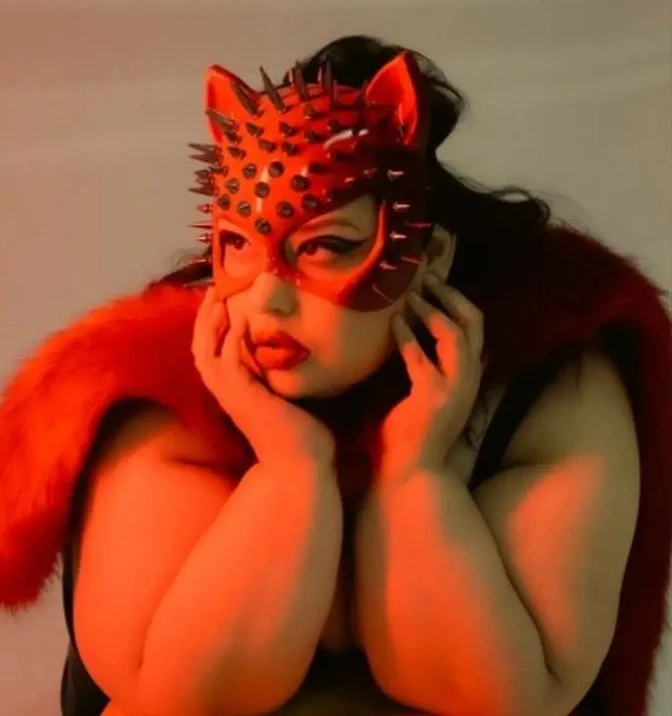
Wesley R. Bishop: Thanks so much for agreeing to talk with us.
Angelina Duplisea: Your welcome. Just for the record too, I don't know why Julia keeps doing this to me. I actually hate interviews about myself.
WRB: [laughing] We will try to make this as painless as possible.
AD: [laughing] Yeah, I just hate talking about myself. It's just not my favorite thing to do. It's hilarious because I want attention, but I want attention to the art that I do. I don't want people being nosy in my private life.
WRB: Of course. Before we begin, just a quick note, if there’s anything you don’t want to answer, feel free to skip it. We can also pause or stop at any time.
AD: Right! If there is a temper tantrum and turn off the video.
WRB: Noted. Could you start by telling us a bit about your background and how you came to art and activism?
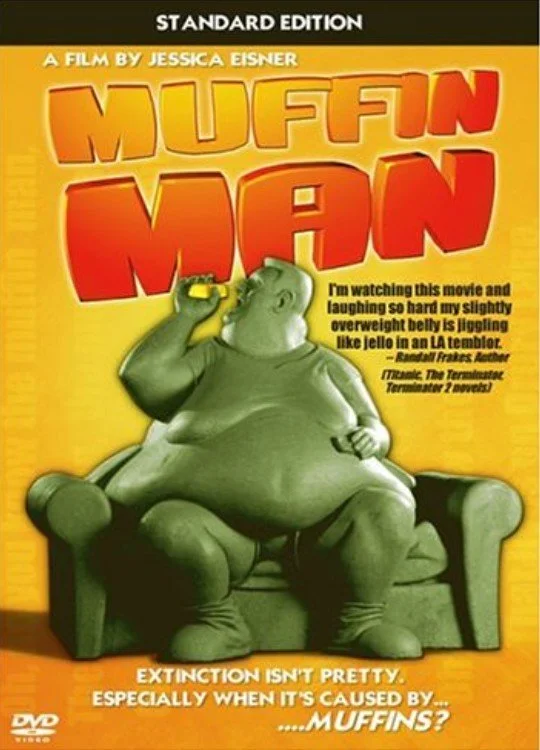
AD: Oh gosh, let’s see. I got into art in the early to mid-’90s. I was living in Vegas then, in the cafe scene, doing poetry and getting on stage. Which is funny, because I was incredibly shy, like being on stage terrified me. But I did it anyway, and realized, okay, I can actually do this. When I moved to Seattle in ’96, I kept going. I was in a film called The Muffin Man which, honestly, most of us who were in it hate now. They sold it as something very different than what it ended up being. But I was also modeling up there, figuring things out. I went back to Vegas for a few years and hated it. The casino culture just wasn’t for me. So I moved to LA, started doing music videos, modeling for people like Julia, and just kept building from there. Tumblr was a huge part of that early growth. It really let a lot of us get our images seen in ways that weren’t possible before. Twitter, a little, but Tumblr was the thing. That was really the start of my career in art and entertainment.
WRB: I apologize, but I am not familiar with the film you mentioned. You said The Muffin Man was presented as one thing but turned out differently. Could you talk a bit more about that, if you’re comfortable?
AD: It was pitched to us as a love story. Most of the cast were fat people, and the idea was this kind of reversal where thin people were the outcasts. So on paper, it felt interesting, even affirming.
Filming itself was fine. The problem was everything around it. The material they added between scenes ended up being really derogatory toward fat people. The director even kept a sort of set diary with comments like, “We might need a defibrillator on set, who knows what’s going to happen with one of these.” It was cruel.
When we finally saw it, at a screening in Redmond, I cried. I was supposed to be the cute, happy girl, and I guess I was, but it didn’t matter. The whole experience felt so negative by then that I just couldn’t feel good about any of it.
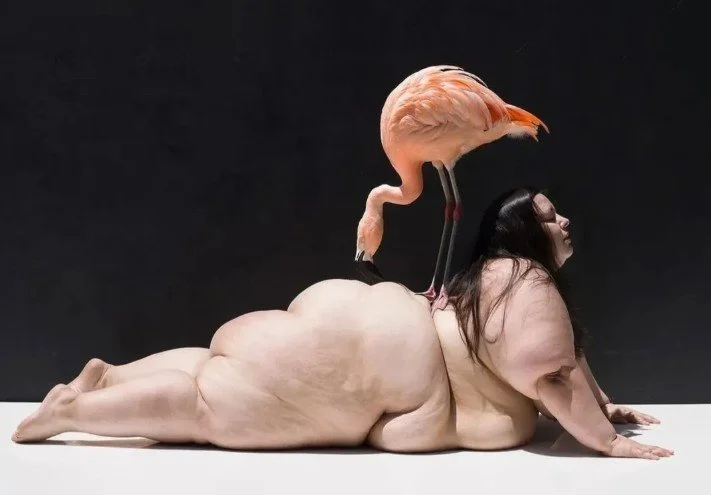
AD: [thinking] And I’ve run into that more than once, honestly. The first time Julia and I worked together, it was similar. She framed it as this project about bodies, and I thought, okay, sure. But when I saw the images, it felt very different. Some of the work involved combining bodies, which was one thing, but then there were other photos of me where my skin was edited to look rough, really textured. And look, my skin isn’t perfect, I’ve lived a life, but the way she treated those images compared to others was stark. The other women were edited to look smooth, soft, almost ethereal. Mine felt emphasized in a way that was harsher. I was furious. I didn’t speak to her for years. I even cussed her out. I told her not to use the images, that I didn’t want to be associated with that work. We just completely cut off contact. Years later, she reached out again about another project. I wasn’t sure, but a friend convinced me to at least consider it, that an artist’s vision isn’t always yours. Still, it felt very specific, like a fat body was being framed as something coarse instead of something beautiful. I’ve mostly moved past it, but I still side-eye her a little. Like, okay, what exactly are we doing here?
WRB: This is something I've heard from many fat artists, models, et cetera, that they come into spaces and then they feel betrayed. Especially when it's film or photographs where there's a loss of control over what's going to happen to that image. When you started working with Julia again, did you talk through those concerns or set any boundaries? Or was it more of a leap of faith?
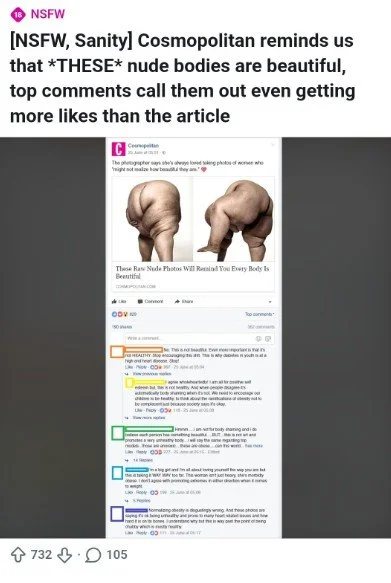
AD: The second time was definitely a leap of faith. It was with her regular partner, Nick Sadler, at his place up in the hills. There was a studio, a makeup artist, other people around, so I thought, okay, maybe this will be more in line with what I’m looking for. It was… fine. We didn’t end up using most of the photos. I have a couple, but something about them just didn’t land for any of us. But Julia and I kept working together after that. She likes to take me to these random locations and just say, “Go roll in the dirt,” or “Climb over there.” One of my favorite shots is me climbing up the side of a mountain off the freeway in Angeles Forest, with cars driving by. At that point, I didn’t really care, and honestly, the photo was worth it. I’m glad I gave it another shot, because we’ve made some incredible work together. But I did talk to her about what happened before. I told her how angry I’d been. I don’t think she fully understood at the time, but she has tried to be more thoughtful, especially when working with fat models, about how bodies are presented. Because those earlier images, they took on a life of their own. They got published widely, Cosmopolitan, Glamour, all over social media, and the response was brutal. Thousands of comments, people saying awful things, comparing me to animals, just constant cruelty. I had to show her what that looked like from my side, because she might get some comments, but not like that. Not the direct messages, the threats. People feel very entitled to say horrific things to fat people.
WRB: You mentioned starting on Tumblr. Were there specific platforms you were drawn to as an artist, and what made some work better for you than others?
AD: Tumblr was more visual. Facebook and Twitter were mostly text. Instagram came later for me because I didn’t have an iPhone at the time, so I came into it later than a lot of people since I’m an Android person. Tumblr just worked differently. You could post multiple images in a way that actually felt like a set, not just a single picture. The tagging system was huge too. You could find people through tags in a way that felt really interconnected. Even though I have complicated feelings about some of the culture around it, it really did bring a lot of people together. For visual artists especially, it was just more usable.
WRB: Over time, did you notice any shift in how people responded to your work online? Did the level of trolling or anti-fat bias stay consistent, or did it change?
AD: It ebbs and flows. Lately, I don’t really hear from trolls much, and I think part of that is I either ignore it or I’ll check their profiles and, if I feel like it, I’ll respond. I don’t really go looking for fights, but sometimes I’ll call it out. I can be blunt about it. Honestly, I’d rather not engage at all. I’d rather just be left alone and focused on my work. I want to be a kind, positive person, but life doesn’t always make that easy, so sometimes I snap when I need to. Most of the time though, I just delete comments and move on. A lot of it isn’t worth the energy. Tumblr wasn’t too bad in that way. Twitter is more exposed, Instagram too, especially after certain things go viral. After the Miley Cyrus coverage and the Piers Morgan interview, I got waves of attention, including a lot of negativity. And whenever those things resurface, it comes back a bit. But most of the time now, people leave me alone, and I appreciate that. I’d really prefer everyone just go find something better to do.
WRB: For readers who may not be familiar, could you explain your involvement in the Miley Cyrus and the Piers Morgan coverage?
AD: Okay. I got a message on Instagram that they wanted me for a Miley Cyrus music video, and I was like, “No fucking way.” I hadn’t applied for anything like that at the time. They just found me somehow, or someone recommended me. I had a friend who worked with Miley before, so maybe that was part of it. I don’t know how they found me to this day. It was in West Hollywood, two full days of shooting. I think I was the only nude person on set, but everyone was incredibly kind, which I was really grateful for because I was also dealing with a health issue at the time that made me bleed a lot. I told them upfront, like, “Hey, I’m dealing with this, I might need to step away,” and they were completely understanding. I never actually met Miley, but her team and everyone on set were professional and really wonderful. I would absolutely do it again. It was a surreal experience to be naked in something that millions of people saw worldwide. That part still messes with my head a little. I can walk around Hollywood and no one recognizes me, and I prefer it that way, but it’s still strange. After it came out, I think I gained like 15,000 Instagram followers overnight when she posted my little feature on her account.
That post is still up, and I think it’s one of the most liked on her page outside of her own content. But there were a lot of trolls. And clearly most of them didn’t even read what I wrote. It was a lot of people asking why I felt the need to show my body or exist in that space. And my response is always the same, I can see myself, I know I’m fat, I don’t need a stranger to tell me. I’m still going to live my life and take opportunities when they come. If my body can do something, I’m going to do it. That upsets people, because what they really want is for you to disappear, to stay inside, to not exist in their field of view. Then, about a week later, I got contacted by a producer from Piers Morgan’s show, Good Morning Britain, asking if I’d come to London to talk about the video. I didn’t have a passport at the time, which I regret now, because I think it would’ve been even more chaotic in person. But we set up a remote interview instead.
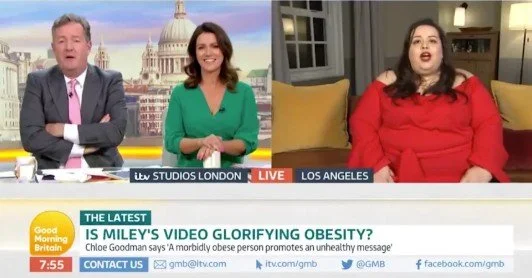
It was late at night in LA, I didn’t have anyone to do my hair or makeup, so I just looked kind of rough. There was also a delay on the earpiece since they were in the UK, so I probably came off slower than I actually was. But I still said what I needed to say. If you’re not bothered by my body, why are you talking about it on TV? And Piers himself is not exactly presenting a picture of perfect health either. After that, people flooded my Instagram again, and they still come back occasionally. It’s always the same thing. They’ll say, “You called him fat but you’re fat.” And it’s like, yes. We are both fat. That’s not a revelation.
[pauses and thinks]
Yeah, I mean… he is fat.
WRB: And yet he says those things. The difference is that he's saying it as a pejorative and you're just saying it as a fact, right? It's a body type. And he's trying to make it in a moral issue. With that why do you think people feel such a need to attack fat people? It seems, on its face, like such an odd thing to focus so much anger on.
AD: It’s a lot of things. We’ve been taught there’s a certain way you’re supposed to look. Every society has an ideal, and if you don’t meet it, you get punished for it in some way. If you’re not the right skin tone, if your hair isn’t the right texture, if your body doesn’t fit whatever the current standard is, there’s always something people will pick apart. It shifts, but it never goes away. A lot of it comes down to desire and resentment. People want access to whatever that ideal is, and when they don’t have it, or feel like they never will, they take that frustration out on other people who are also outside of it, but more visibly so. Especially those who are already more vulnerable to that standard. So I think it really comes from wanting something they’ve been told they should have, and not knowing what to do with that feeling.
WRB: Well said.
AD: They want access to those things that get assigned to people who meet society’s standards. Most of them will never fully get it, maybe just a small taste of it, but not enough to feel secure. So there’s this impulse to find someone who is “below” them in that hierarchy and say, “Well at least I’m not that.” It becomes a way to manage their own frustration. But when you don’t react the way they expect, when you’re a fat person or a brown person or whoever and you’re not visibly suffering under that system, they get angry. They’re like, “Why aren’t you trying harder to reach the ideal? Why are you okay?” The thing is, everybody has different desires. Figure out what you actually want and go after it, instead of policing other people who have nothing to do with your life or your goals. And the reality is, a lot of this comes from people being miserable. It’s always the same argument, “You’re fat, you’re unhappy, if you just did what I do you’d be better off.” But if someone is genuinely well, mentally and emotionally, they’re not spending their time tearing other people down. So when people act like that, they’re not really proving they’re healthy or happy. They’re just revealing something else entirely.
WRB: So it is when someone doesn’t conform to that ideal but is still confident in themselves, it challenges what people have been taught to believe, and that can trigger more hostility?
AD: Yeah. It’s like, “You should want this because I want this.” Like they’re the center of the universe, and whatever they value is what everyone else is supposed to value too.
WRB: I think you're onto something there. Because if you have someone like Gwyneth Paltrow, just as an example, and she is used as a standard for beauty—
AD: I think she's so ugly. She's so ugly to me.
WRB: She has done a lot of harm in body size acceptance and general health… yeah, if she’s the standard and there are million dollar industries around telling people to look like her. And if someone comes along and says, "Actually, I don't want it. I actually don't want the thing that you're selling." It's like all of a sudden that whole industry just falls apart. They have nothing to sell because the illusion of happiness and acceptance is gone and its just selling a thin blonde body type as the ideal.
AD: Yeah. I remember in the early 2000s, maybe late ’90s too, Gwyneth Paltrow was kind of the ideal. Everybody was like, “Gwyneth, Gwyneth, Gwyneth.” And I never really understood it. I’m not saying anything about her as a person, I don’t know her. But I was never drawn to her as an ideal. She just wasn’t someone I looked at and thought, “I want to look like that.” And I remember people getting almost offended by that. Like, “What do you mean you don’t want to look like her?” And I’m like, why would I? I don’t even like her that way. She’s just not my thing. Her movies didn’t really grab me, her style didn’t pull me in. So when people would say things like, “You’ll never look like that,” it was like, okay… I don’t want to.
WRB: Circling back to an earlier part of the conversation, when you’re doing nude or semi-nude shoots in public or semi-public spaces, what was that experience like for you? Did it feel difficult at first and become easier over time, or was it always situational depending on who was around?
AD: I don’t think a lot of people know this, but back in 1997 my first nude shoot was for a magazine called Plumpers. I did it because I needed the money, not because I was thinking this would be my career path. I was nervous, because it was very “show everything,” and that’s not really how I move now. I’m not super comfortable with that kind of overt sexuality. But being naked in an artistic context is completely different from that. I never really had an issue with nudity itself in that sense.
WRB: That makes sense. In your mind, then, there's a difference between nude or just being naked as a fact versus sexualization of nudity?
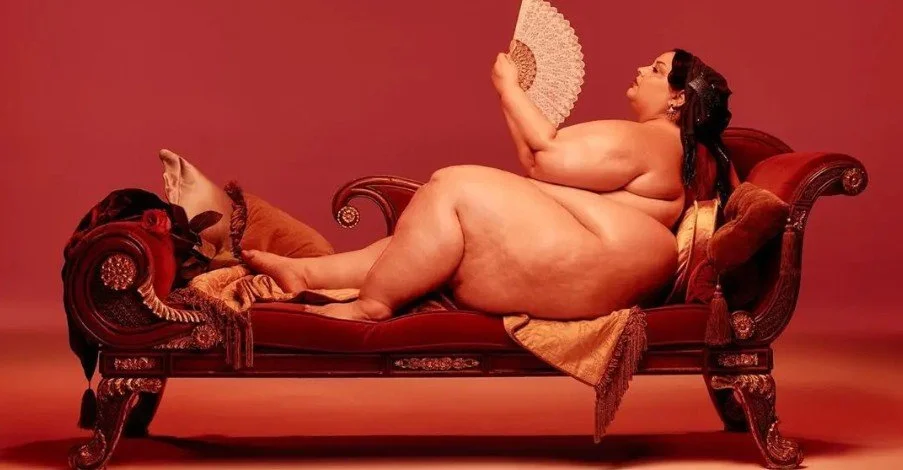
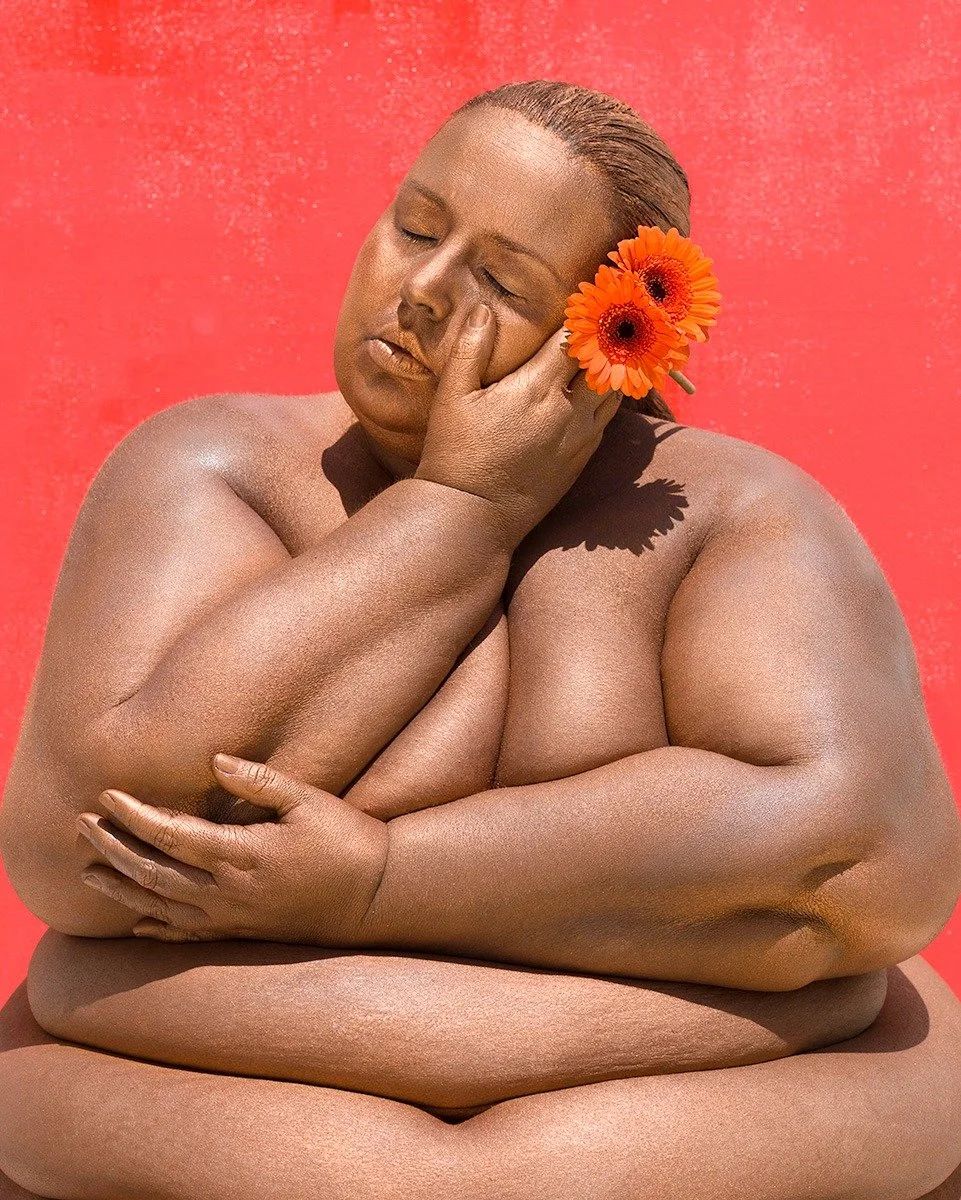
AD: Yeah. That’s one of the things that irritates the shit out of me. We do these really cool art projects, like the work I’ve done with Julia or Sylvie, and I have these incredible images that I actually love. They’re nudes, they’re artistic, they’ve been in galleries and publications. And then you get these people who completely miss the point. Just straight up fetishists, fat admirers, whatever you want to call them, sending things like “I want to lick your butt” or worse. It’s constant, and it’s exhausting.
WRB: I'm sorry. I can only imagine…. with that, can you talk a little bit about some of the negative comments? For you, as you moved through Tumblr onto Meta, et cetera, did you face issues with censorship or harassment? And within that, how did you experience different platforms and policies like shadow banning, harassment, or outright censorship? As an artist, how have you navigated that space?
AD: IG has removed quite a few of my photos. I’ve even tried to blur things out and still got censored. I think I’ve have a shadow ban situation going on. I have about 17K followers right now, but I had another account before that was up to around 33K and the whole thing got deleted and I couldn’t recover it. So I’ve definitely dealt with a lot of censorship, especially around art photos. Even when they’re blurred, they’ll still flag them as “nude” or say it’s soliciting. And I’m like, I’m not soliciting anything, what the fuck are you talking about? Did anyone even read this? It feels a bit looser now, but there was a period where things got a lot more heavily censored. I also remember changes in how platforms and laws were being enforced around content online. Kamala Harris had an instrumental role in some of the legislation that was passed around that period. I used to work booking escorts in Las Vegas for a while, so I saw a lot of how those systems functioned, and when I moved to LA I was still adjacent to that world. At the time, there were sites where you could post pretty openly, even Craigslist in certain sections. Then everything started tightening up, and those spaces were shut down or heavily restricted. You couldn’t post in the same way anymore, even on places like Eros or Backpage. Everything got pushed onto smaller, more controlled platforms, some of which were paid or had strict rules about what you could say or even imply. It became a lot harder to operate in those spaces after that shift, and a lot of sites just disappeared or couldn’t function in the US anymore once those changes went through. And what people like Kamala Harris did is they presented this censorship as “preventing child trafficking” online, which is great, wonderful, we definitely don’t want children trafficked, but this didn’t help the cause and just drove the traffickers to more underground methods. Meanwhile adults who chose to escort were deeply impacted in their work.
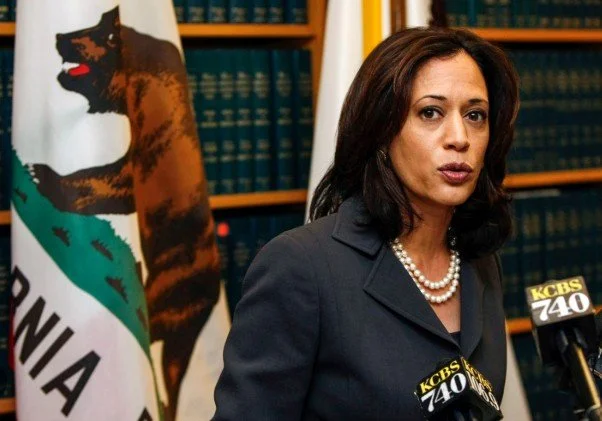
WRB: When you mention Harris, are you referring to her time as California Attorney General or later in the Senate?
AD: When she was in California politics. It was like the 2005, 2007, somewhere around there. [thinking] When that got passed, that's when all of the extra censorship popped up on Tumblr, on Facebook, and on Instagram, everything started getting censored more we couldn't post anything. I would get warnings if I posted any uncensored nudes… But yeah, that was very instrumental in the whole censorship thing. And I feel like lately it hasn't been as bad. I haven't gotten as much shit for the photos that I post. As long as they are censored with any nipples or bushes censored or blurred out or whatever. [thinking] Yeah they haven't knocked me down as much. Now, if am shadow banned, its because I talk so much shit about the government. That's what I'm getting censored for now, not my fat ass.
WRB: [laughing] Well, progress, right?
AD: [laughing] Yeah, I guess.
WRB: So in your experience this is both Meta and Tumblr, or is this just specifically on Meta that you were finding this?
AD: I’m not really on Meta as much anymore. I have a Facebook page and a personal account, but I just don’t use them much. It just doesn’t feel like my space.
WRB: I wasn’t really on Tumblr myself, but from what I understand, it was a major space for body positivity and fat liberation. A lot of people seemed to find community there.
AD: Yeah. Before Tumblr, there was LiveJournal. I don’t know if you were around for that, but I feel like a lot of this really started there in the late ’90s and early 2000s. There were fat-positive communities, groups where people would share photos, write posts, build connections. There were also those rating communities, like “rate me” or “rate my outfit,” which were… a whole thing. But even within that, people carved out space for plus-size folks. It was kind of an early version of what later became more visible online. A lot of those people eventually moved over to Tumblr because it was just easier, especially for visual work. You could post images more fluidly, organize things through tags, and it didn’t require the same level of HTML tinkering that LiveJournal did. It just made sharing and building community a lot more accessible.
WRB: When did you first become aware of fat liberation as a movement or political framework? Was that something you encountered early on, or did it develop later for you?
AD: I’d say it came later for me, probably around 2010, right before things really took off in a bigger way. There were Facebook groups I joined, and at the time it felt kind of radical, like people posting photos of themselves feeling good in outfits they might’ve been shamed for wearing. But even then, there was still a lot of gatekeeping. I remember posting a photo of myself in a bikini, this was maybe 2006 or 2007, and I got pushback from the group leader, like, “We don’t need to see that.” And I was like, okay… What’s funny is that same person later became part of the whole “fatkini” wave, had a clothing line, was involved with Skorch magazine, all of that around 2010 or 2011. So I’d already seen that shift happen in real time, from judgment to celebration, depending on who was doing it. That’s part of why I never fully immersed myself in those spaces the way some people did. There can be a real “mean girl” dynamic. If you’re not part of the clique, you don’t get support, you don’t get invited to things, you don’t get amplified. And if you call something out, you can get pushed out entirely.
WRB: Do you think those kinds of clique dynamics still exist within body positivity and fat liberation spaces today?
AD: Yeah, absolutely. It’s clique-ish for a couple of reasons. One is speaking out, like if you say the “wrong” thing or call something out, that can get you pushed to the margins. The other is size within the community itself. There are all these internal categories, smaller fat, mid-size, superfat, and the hierarchy is real. People in larger bodies, especially superfat folks, often don’t get the same visibility or support, even when they’re doing incredible work. And then race plays into it too. A lot of the attention has historically gone to smaller, white women with the “perfect” Eurocentric features that have been shoved on us for decades. Meanwhile darker skinned fat people, and especially fat Black creators, get overlooked. So yeah, there’s definitely gatekeeping. There are people who should have had way more visibility and recognition than they ever got, while others became the face of the movement.
WRB: Where do you think fat liberation stands today, as a social or political movement, especially in the current climate of reactionary politics?
AD: I don’t think it’s as much of a priority for people right now, with everything else going on in the world. It feels like attention has shifted. And then there’s the whole Ozempic wave and similar drugs. A lot of people are trying them, and for some, they’ve genuinely helped. I’m not personally on it. I did try it for a few months but ended up having gastric sleeve surgery (VSG) in early 2025, and that was for health reasons, not aesthetics. What’s frustrating is how quickly the conversation flips. People get attacked for gaining weight, and then they get attacked for losing it. It’s like, why are we policing bodies in either direction? At some point, it just becomes about control. Why are we commenting on other people’s bodies at all?
WRB: So in your thinking, do you gravitate more towards body positivity, fat liberation, body neutrality, or some mixture of them?
AD: I think it’s a mix. I’ve seen a lot of people lose weight and then turn into really awful, judgmental people, which is wild because you’d think they’d have more empathy. It becomes this attitude of, “Well, I did it, so anyone can,” and that’s just not true. And then there’s backlash in the other direction. People get criticized for using GLP-1s or having surgery, and it’s like, you don’t actually know why they made that decision. For a lot of people, it’s about their health. If we’re really talking about body neutrality or people being their healthiest selves, then that has to include letting people make their own choices. Don’t assume, don’t police it, don’t insert yourself. Unless you’re close to that person and they’ve invited that conversation, it’s not yours to have.
WRB: What are your thoughts on GLP-1 medications more broadly? Do you think they’re being used appropriately, or is there concern about overuse or misuse?
AD: I think if people are paying for it themselves and they’ve got very small amounts of weight they’re trying to lose, like five, ten pounds, I personally question that more. That feels closer to misuse to me. But for a lot of people, it’s being studied more now and we’re learning it has broader effects. It can help with things like alcohol dependence, food noise, even quitting smoking for some people. So it’s not just a weight thing for everyone. If someone is using it for something like an addiction issue, and it’s helping them function better, I don’t see that as abuse at all. And it’s not “taking away” from diabetics, because it’s prescribed and used in different medical contexts and formulations. At the end of the day, it’s a long-term thing. If you stop medication for diabetes or heart conditions, there are consequences. So treating this like a quick fix is where I think the misunderstanding happens. The people who understand it as something ongoing, tied to brain and body systems, I don’t see that as abuse.
WRB: In your experience around Hollywood, do you see GLP-1 medications being used primarily as weight loss tools among celebrities, or is that perception overstated?
AD: I don’t really know anyone who’s smaller and using it for what I would call nefarious reasons. So I can’t really speak to that side of it. The people I do know out here who are on it were already fairly health conscious, vegetarian, generally living that kind of lifestyle before GLP-1s came into the picture.
WRB: You’ve mentioned modeling and acting. What other creative mediums do you work in? For example, do you also write poetry?
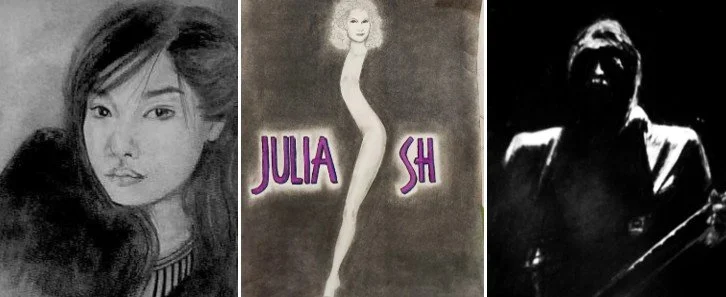
AD: I used to do poetry. I haven’t written anything in a very long time. I also do pencil art, drawing people and figures. I’ve been drawing since I was a kid. I went through phases, unicorns, horses, flamingos, then I got into more mythological stuff, goddesses and more fantastical imagery. Eventually I started drawing people, and I was fairly good at it without really having formal training. I took one art class in high school, but that was about it. A lot of it was self-taught. I used to sit in cafés and draw for hours, drink coffee late into the night, smoke cigarettes, all of that. That was kind of my early artist life. I still draw occasionally. I did a piece just a couple of weeks ago just to see if I still could.
WRB: What have you been drawing, or wanting to draw, in your visual art?
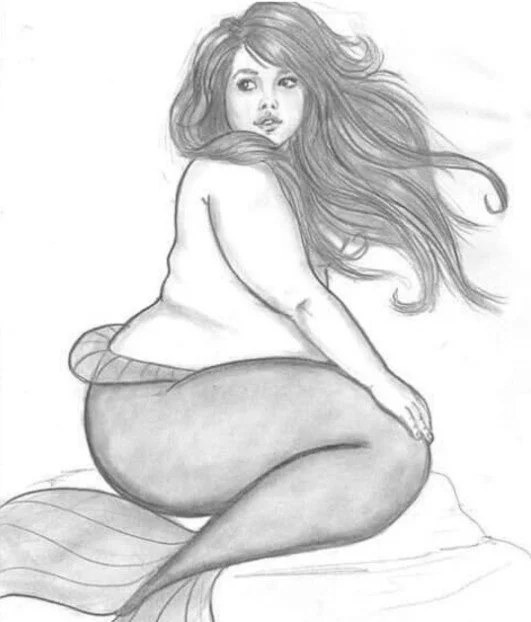
AD: Mostly just drawing from memory. I keep saying, okay, go sit down, get off the fucking internet and go draw. And I have not been able to motivate myself to do that, but hopefully I'm starting a new meditation that will help me stop doom scrolling and start doing functional things… There’s one piece that actually became pretty popular. It was one of the first “fat mermaid” posts on Tumblr. I posted it around 2011 or 2012, and over the years a lot of people have tried to claim it as theirs. But I didn’t put a watermark on it, which led to people trying to claim it as theirs. So I usually refer to the Tumblr post 2011 to authenticate it as my work. You can’t find it anywhere before that original post.
WRB: That's beautiful.
AD: Thank you. I guess at the time her name was “PearChan.” I based it off of her because she's so pretty. She's like me. She has a big ass and is smaller up top. It’s got so many thousands of views. I don't even know anymore. I haven't checked on it recently, but that was one of the first super popular Fat Mermaid photos or drawings on the internet.
WRB: Well thank you for your time. Its been a pleasure talking with you.
AD: Thank you!
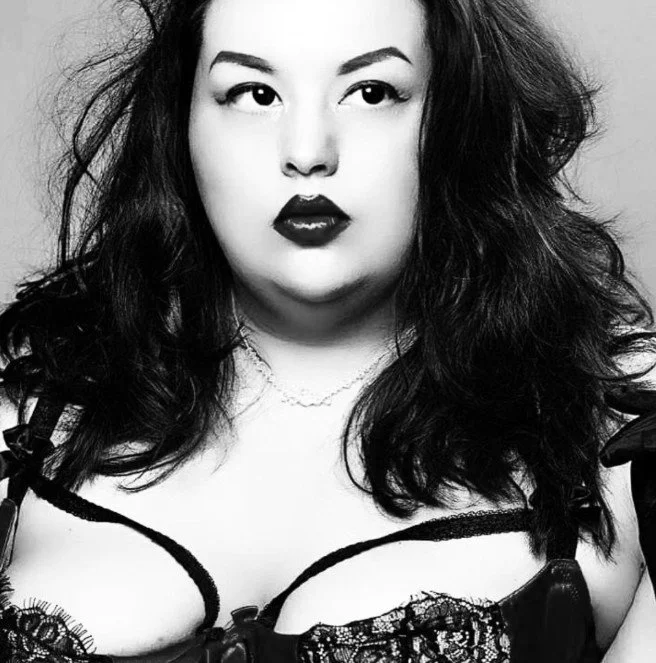
Note: During the interview process Duplisea pointed out that the Cosmopolitan story first published in February 8, 2016 under the headline “These Raw Nude Photos Will Remind You Every Body is Beautiful,” had been replaced with the link now directing readers to a story “Kendall Jenner Goes Topless in New Poolside Bikini Pics.”
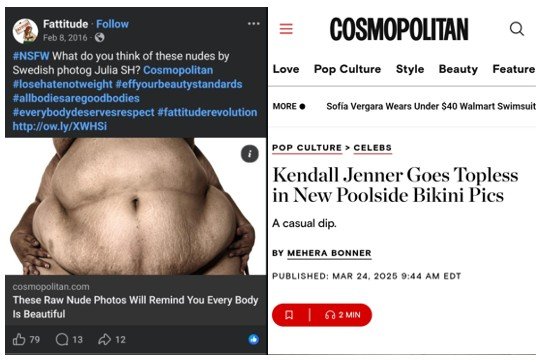
This follows a general backlash in the public against body size activism and what activists have called a shallow embrace of body positivity. For example, following the interview Duplisea shared these anti-fat comments that the story at Cosmopolitan had received in regard to Julia SH’s work.
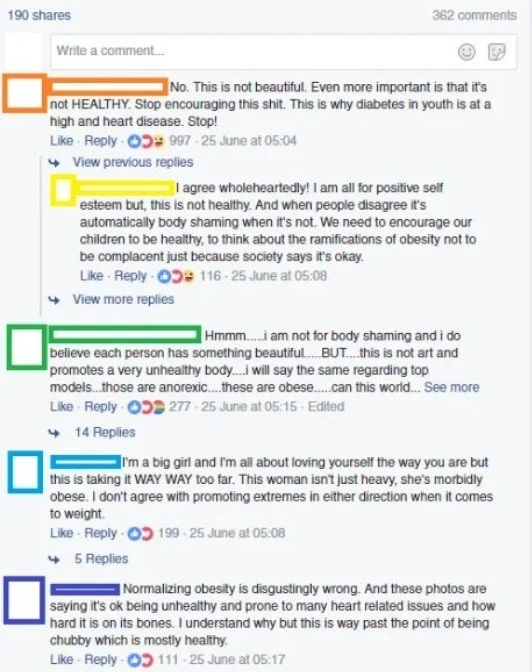
As many body size activists and artists have stated, this points to the persistent issue of superficial support from corporations to normalize body size diversity. And how the fight for a fat liberated, and body positive culture is still a work in progress.